






Breeds
Maine Coon vs a Regular Cat
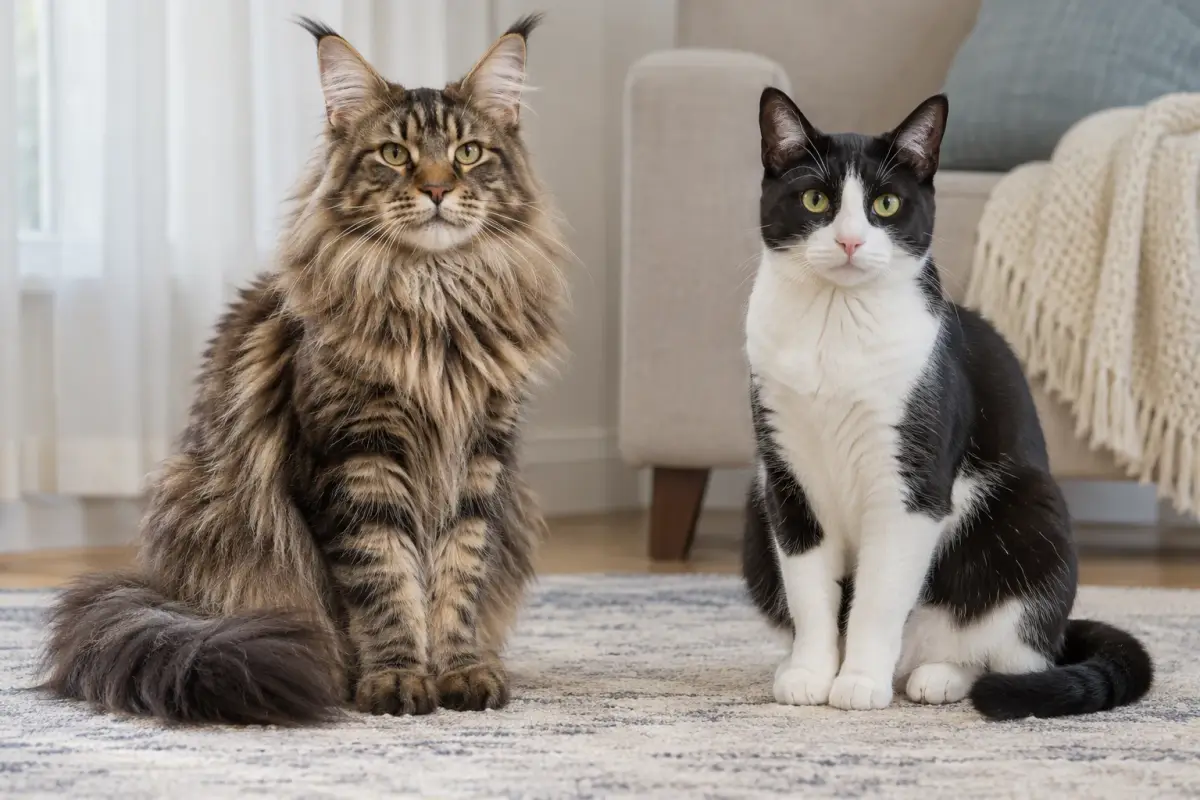
A Maine Coon is a defined breed with a large frame and a substantial long coat; a “regular cat” usually means a non-pedigreed companion with no single breed standard. That makes the most useful comparison individual rather than numerical. Consider the actual cat’s size, grooming, personality, and health instead of assuming pedigree makes it a better companion.
By Matt GarnettUpdated November 14, 20263 min read4 sources
What can and cannot be compared side by side
VCA lists a Maine Coon weight guide of 8–20 pounds and a lifespan guide of 12–15 years. CFA describes the breed as large, longhaired, gentle, and active. Those are broad breed descriptions, not promises about the cat you will meet.
A non-pedigreed cat has no matching single row for size, lifespan, energy, grooming, or trainability. CFA’s household-pet category does not use a written breed standard. Compare the actual adult’s build and behavior or discuss a kitten’s development with your veterinarian. Its coat length and history will tell you more about practical care than the label “regular.”
Look beyond size when meeting a Maine Coon
A large cat needs equipment that fits comfortably, including a carrier and resting places. Think about handling as well as appearance: can you manage the cat gently when transporting it or providing care? Ask about its adult size and any help it needs with movement.
CFA describes Maine Coons as sociable and interested in interacting with their families. Ask how the individual seeks contact and plays. A large frame does not make a cat automatically tolerant of lifting, children, or other pets. Meet the cat on its own terms and avoid expecting a personality because its size impressed you.
Judge a non-pedigreed cat on its own history
Non-pedigreed cats can have a wide range of appearances and preferences. Ask the caregiver about this cat’s favorite activities, familiar people, handling tolerance, and response to visitors. For an adult, observations from a settled home may help you understand needs that are not obvious in a short introduction.
Do not interpret the absence of pedigree as a lack of useful information. Medical records, a known routine, and a thoughtful description of behavior are practical evidence. Equally, do not invent a breed identity from a fluffy tail or a large body. Choose the individual whose documented needs fit the home you can provide.
Compare grooming, play, and daily care
CFA recommends combing a Maine Coon regularly to manage shedding and tangles. A non-pedigreed longhaired cat may also require significant coat care, while a shorthaired individual has different needs. Ask for a demonstration of the cat’s current grooming routine and discuss any handling discomfort.
For either cat, indoor life should include opportunities for activity, comfortable rest, and scratching. VCA emphasizes physical, mental, and social enrichment for indoor cats. Compare what the individual enjoys rather than assuming a pedigreed cat needs more stimulation. Ask about play and learning preferences, and make your home suitable for the cat’s actual size and mobility.
Choose for compatibility and long-term care
A Maine Coon may appeal if you enjoy a larger, longhaired companion and can sustain its coat care. A non-pedigreed cat may offer an equally good match when its observed personality and needs suit you. There is no sound reason to rank the value of companionship by a registration label.
Have your veterinarian review available records and discuss preventive care. Neither pedigree nor mixed ancestry guarantees health or a particular lifespan. Seek advice about unexplained changes in appetite, movement, comfort, or behavior. Choose with the care you can maintain through adulthood and older age in mind.
This page is general information, not veterinary advice, and it cannot replace an examination by the vet who knows your pet.
Common questions
Does a large fluffy cat have to be a Maine Coon?
No. Size and a long coat alone do not establish breed ancestry. Non-pedigreed cats can share those features, so avoid assigning a breed identity based only on an appearance or photograph.
Is a regular cat a separate breed?
No. In this comparison it means a non-pedigreed companion, not a standardized breed. Such cats vary in size, coats, activity, and personality, making an individual assessment the useful approach.
Does a Maine Coon always need more grooming?
A Maine Coon needs regular attention to its long coat. A non-pedigreed longhaired cat may have substantial grooming needs too. Compare the actual coats and handling routines rather than pedigree labels.
Sources we checked
This guide is general information, not veterinary advice. If your pet is unwell or injured, contact your veterinarian.