






Breeds
Rottweiler vs Doberman: Two Guardians, Two Styles
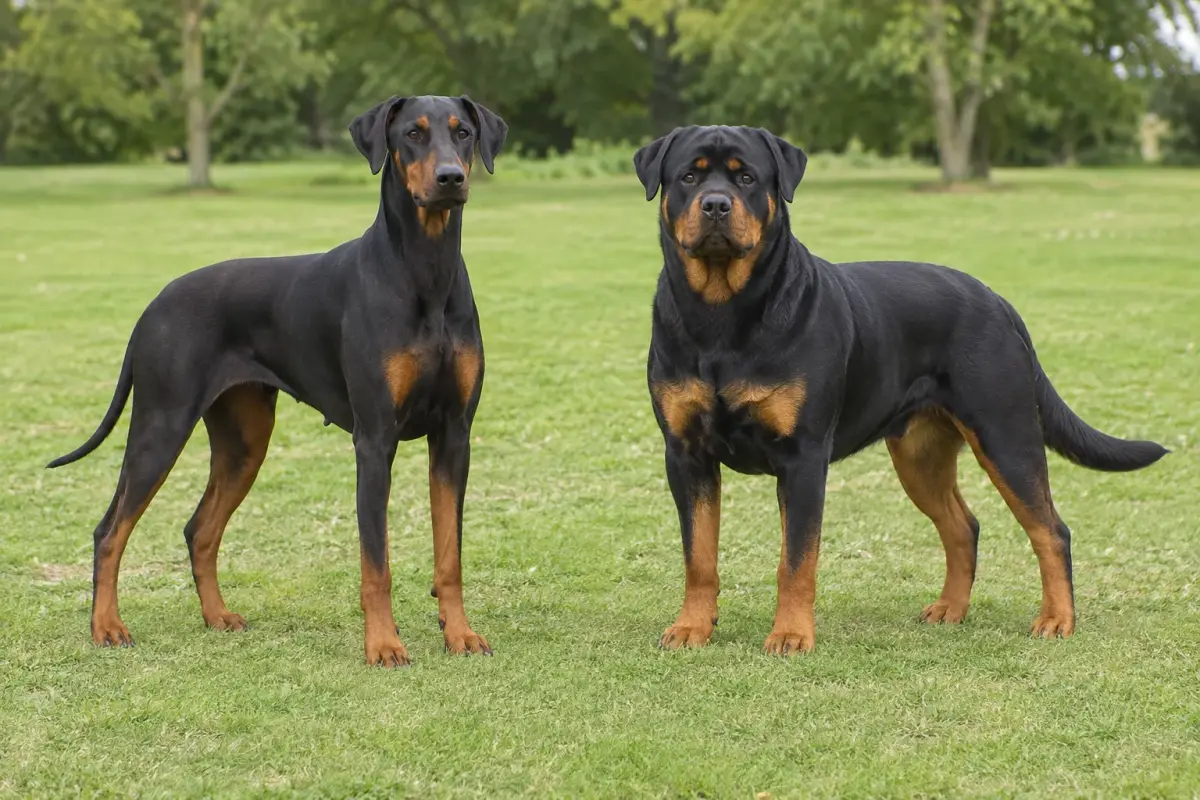
The Doberman and the Rottweiler are both loyal, protective working breeds for experienced owners, but they are built differently. The Doberman is taller, sleeker and more energetic, at 60 to 100 pounds per the AKC; the Rottweiler is heavier and more powerful, at 80 to 135 pounds, and somewhat calmer day to day. Both need early socialization, consistent positive training and a vet who knows their breed-specific health risks.
By Matt GarnettUpdated November 14, 20264 min read4 sources
Side by side
Size: the AKC lists Doberman males at 26 to 28 inches and 75 to 100 pounds, females at 24 to 26 inches and 60 to 90. Rottweiler males stand 24 to 27 inches at 95 to 135 pounds, females 22 to 25 inches at 80 to 100. Lifespan: AKC gives Dobermans 10 to 12 years and Rottweilers 9 to 10. Popularity: the Rottweiler is No. 8 on the AKC list and the Doberman No. 16. Coat: both short; Dobermans come in black, red, blue or fawn with rust, Rottweilers in black with rust.
Energy: VCA rates Dobermans high and Rottweilers moderate to high. Time alone: VCA says Dobermans have limited tolerance and are prone to anxiety; Rottweilers moderate tolerance once trained. Experience: VCA rates both best for experienced or confident owners. Children: both generally good with training and supervision. Other pets: both may be selective. Best for: active, experienced owners who want a devoted guardian.
Origins and character
The AKC calls the Doberman Pinscher one of dogkind's noblemen, sleek, powerful and keenly intelligent, and one of the world's finest protection dogs. VCA says it was developed for protection and companionship, is strongly bonded to family and often excels in obedience and working roles. Its lean, athletic frame is built for speed and agility.
The Rottweiler, per the AKC, is a robust working breed of great strength descended from the mastiffs of the Roman legions, a gentle playmate and protector within the family that watches the outside world with self-assured aloofness. VCA notes it was developed for herding and guarding, and its broad head and solid, muscular body reflect that heavier work.
Temperament and training
VCA describes Dobermans as intelligent and devoted, highly protective of family, eager to learn and responsive to consistent positive training. Without socialization, they may become overly protective or reactive, and their high energy needs both physical and mental outlets. They are sensitive dogs that do not cope well with long hours alone.
Rottweilers are confident, protective and deeply loyal, naturally alert and often cautious with strangers, says VCA. Without training they may become overly protective or difficult to manage, so early socialization is essential for stable behavior. With both breeds, use reward-based training, start puppy classes early, and practice calm greetings with visitors from the first weeks.
Exercise and daily care
VCA says Dobermans require substantial daily exercise, such as running, structured training and interactive play, and are sensitive to cold because of their short coat, so a coat helps in winter. Rottweilers need regular daily exercise, walks, training and structured activities, but they are less of a running partner than a Doberman.
Grooming is easy for both: weekly brushing, occasional baths, nail trims and ear cleaning. VCA advises watching a Doberman's skin for irritation or hair loss. Both are powerful dogs, so teach loose-leash walking while the puppy is small, use a secure fence and check local rules, leases and insurance before bringing one home.
Health: what to screen for
VCA calls dilated cardiomyopathy, a heart muscle disease, one of the most significant risks in Dobermans, noting it can cause heart failure or sudden death without obvious early signs, and strongly recommends regular cardiac screening with echocardiography and ambulatory ECG monitoring. It also lists von Willebrand disease, a clotting disorder, Wobbler syndrome, hip dysplasia, hypothyroidism and bloat.
For Rottweilers, VCA highlights joint disease, hip and elbow dysplasia, and certain cancers, especially osteosarcoma, a bone cancer, plus bloat, which needs immediate veterinary attention. Ask your vet about the signs of bloat in deep-chested dogs, ask breeders for hip, elbow, eye and heart screening, and keep either breed lean to protect its joints.
Which to choose
Choose a Doberman if you want a sleek, athletic, highly trainable companion for running and dog sports, are home enough to prevent separation anxiety, and are ready for lifelong heart screening. Choose a Rottweiler if you want a heavier, steadier guardian and family dog that needs a bit less running, and can commit to joint and weight care for a big frame.
Both reward experienced, consistent owners and both can be gentle with their own families. If you are new to large guardian breeds, spend time with adult dogs of each breed, talk to breed clubs and consider working with a trainer from puppyhood.
This page is general information, not veterinary advice, and it cannot replace an examination by the vet who knows your pet.
Common questions
Which is bigger, a Rottweiler or a Doberman?
The Rottweiler is heavier, at 80 to 135 pounds per the AKC, while the Doberman is taller and leaner, at 24 to 28 inches and 60 to 100 pounds. Rottweilers stand 22 to 27 inches.
Which is a better guard dog, a Doberman or a Rottweiler?
Both are natural guardians. The AKC calls the Doberman one of the world's finest protection dogs and describes the Rottweiler as a protector within the family. Either needs socialization so its guarding is reliable, not reactive.
Which lives longer, a Doberman or a Rottweiler?
The Doberman, slightly. The AKC lists Dobermans at 10 to 12 years and Rottweilers at 9 to 10 years. Regular vet care and screening for breed risks help either reach its full lifespan.
Are Dobermans or Rottweilers better with kids?
VCA rates both as generally good with children when properly trained and supervised. Their size and strength mean play with young children should always be watched.
Sources we checked
This guide is general information, not veterinary advice. If your pet is unwell or injured, contact your veterinarian.