






Buying guides
Comparing Cat Wheelchair Measurements
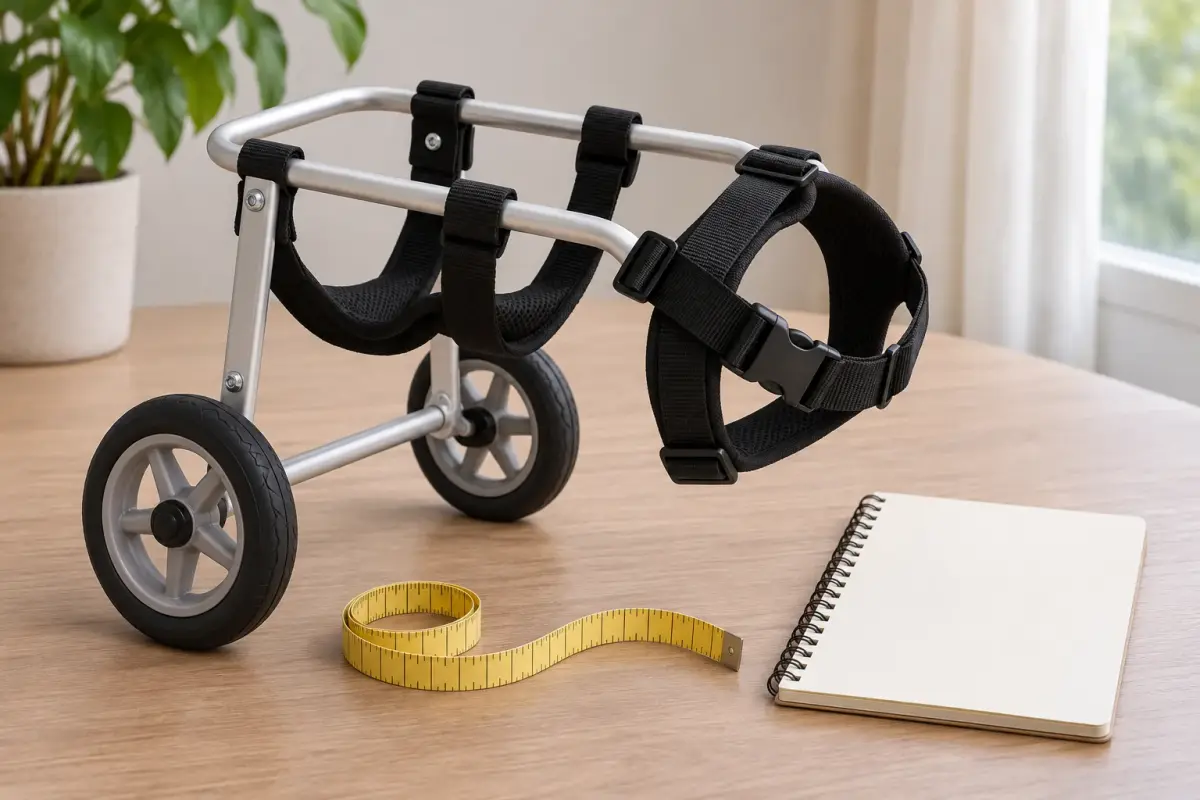
A cat mobility cart has several different measurements: the animal fit range, the assembled frame, the wheels and the box used for shipping. Keep them separate when comparing equipment. This checklist helps you collect and label those details; it does not decide whether a cart is appropriate for an individual cat.
By Giddy Pets EditorialUpdated November 14, 20263 min read2 sources
Start with the exact model and fitting method
Write down the model, size label and the particular diagram used to measure for it. Small, kitten and medium are names rather than standardized dimensions. Two carts with the same label may use different frames or support arrangements. A photograph of a cat in a cart does not establish the adjustment range for another animal.
Manufacturer instructions are model-specific. For example, Walkin’ Pets’ cat wheelchair measuring instructions distinguish rear-leg height from body length. That illustrates why a generic back-height measurement cannot replace the method supplied for a different frame. Ask the maker to identify the relevant measurement points before comparing numbers.
You can compare those fit ranges against the listings in our cat wheelchairs range, which give each model's own measurements.
Separate fit ranges from packed dimensions
Create separate entries for animal measurements, assembled frame measurements and shipping measurements. A package length describes the box or folded components; it does not tell you how long a cat the assembled frame will accommodate. Package weight also includes the packing and cannot establish a support limit.
The adjustable two-wheel cat cart is offered in S, M and L. Its page identifies the published box dimensions as packed sizes. Those values should not be used as a fit chart. Get the exact adjustment limits and the mapping between named models and the size selector before ordering.
Record height and width as separate checks
A useful comparison sheet names every measurement, its endpoints and its unit. Height may mean a body reference, wheel height or overall frame height. Width may mean hip width, inside rail spacing or total wheel-to-wheel width. Label each one rather than copying all the numbers into a single size field.
When a diagram and a selector use different names, leave the match unresolved until it is confirmed. Do not assume that the first row belongs to Small or that increasing package sizes prove the correspondence. Record the question you need answered, along with the model and size label, so the response addresses the correct cart.
Check the frame and route around the home
Measure the narrowest doorway and turns along the intended route. Compare these with the assembled wheel-to-wheel width, including projecting fasteners. A frame that fits across one doorway may need more turning room at the next corner. Rugs, thresholds and changes in floor level are separate practical constraints.
Inspect where straps, padded pieces and wheels sit relative to the frame. Identify which parts move during adjustment and which fasteners secure them. Ask for the assembly drawing and replacement-part information. These checks describe the equipment layout; they do not establish a therapeutic benefit or replace a professional assessment of its use.
Keep a complete comparison record
Keep the model-specific chart, adjustment ranges and assembly instructions together with the product code. Include photographs of the actual fittings and note whether stated dimensions include wheels or projecting hardware. If a revised chart arrives, retain the earlier version and record which model the replacement covers.
Check clinical suitability and any fitting or wearing plan with a veterinarian familiar with your cat. Do not develop a session schedule from a product photograph. For purchase comparison, stop at the facts you can verify: frame layout, exact fit ranges, adjustment method, assembled clearance and supplied components. No second comparable cat cart is currently included in this guide.
Common questions
Can shipping dimensions replace a fit chart?
No. Shipping measurements describe the packed item, not the animal adjustment range.
Can I map kitten, medium and large rows to S, M and L by their order?
No. Obtain the maker’s explicit mapping for the exact product.
Does this guide recommend a cart for a medical condition?
No. It compares equipment information; suitability and clinical fitting need an individual veterinary assessment.
Sources we checked
This guide is general information, not veterinary advice. If your pet is unwell or injured, contact your veterinarian.

