






Breeds
Russian Blue vs Chartreux
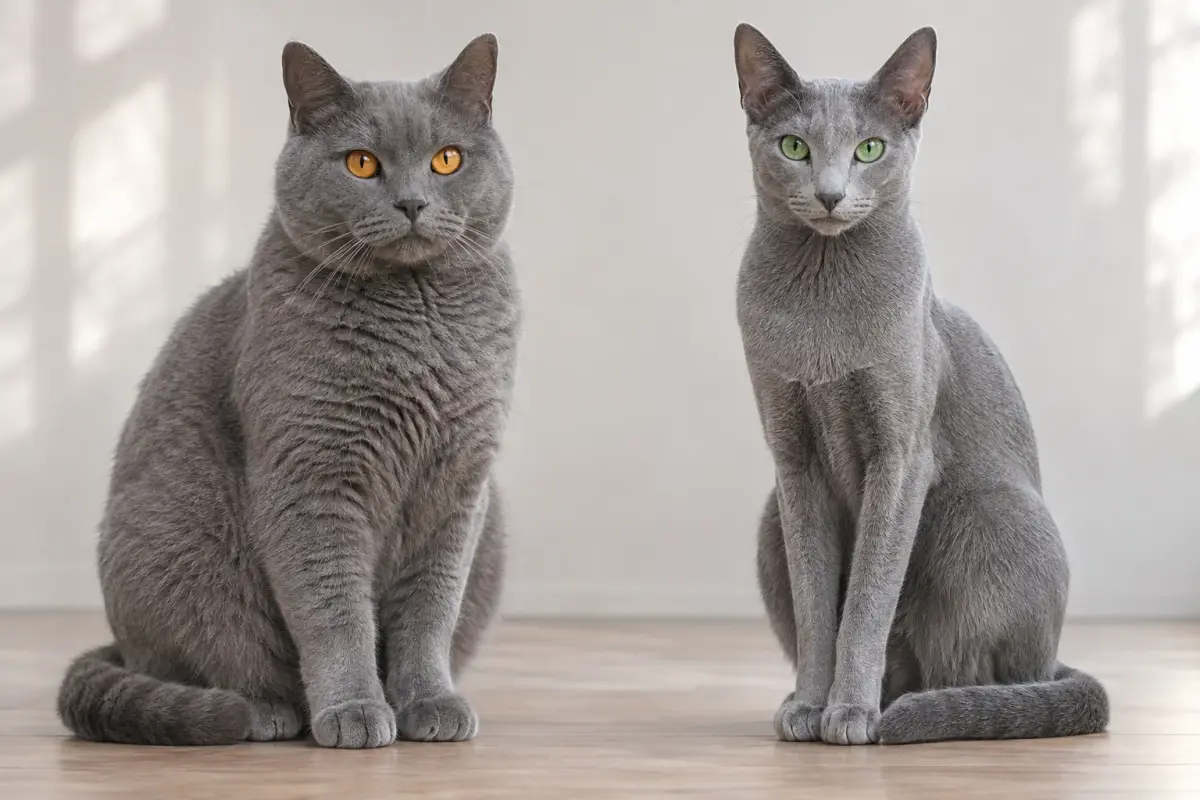
The Russian Blue is generally the more fine-boned, graceful cat, while the Chartreux has a broader, more powerful body and a woollier coat. Both can offer quiet, affectionate companionship. Their shared blue coloring does not establish the same personality or care needs, so compare build, handling, play, and the individual cat’s history before choosing.
By Matt GarnettUpdated November 14, 20263 min read4 sources
The differences side by side
CFA describes Chartreux as muscular cats with woolly blue coats and gold-to-copper eyes. Russian Blues have more graceful outlines, green eyes, and dense, silver-tipped blue coats. These are distinct breeds; a blue mixed-breed cat cannot be identified as either from color alone.
VCA gives Chartreux a 6–14-pound weight guide and Russian Blues a 7–13-pound guide. Its lifespan range for both is 12–15 years. Both can be playful and quiet, but grooming and social preferences vary. Use those broad guides to prepare questions about the cat you meet, rather than choosing by a numerical ranking.
Compare their ways of being close to people
CFA describes the Chartreux as affectionate and fond of familiar routines, sometimes following a person around the home. That may appeal if you enjoy quiet company during ordinary activities. Ask whether the individual cat seeks a lap, stays nearby, or prefers affection on different terms.
The Russian Blue may be hesitant on first meeting and more affectionate once comfortable. Allow time to observe rather than deciding a reserved greeting means an unfriendly companion. Ask what the cat does with familiar people and which settings help it feel at ease. A short introduction does not reveal every part of its personality.
Give a quiet cat opportunities to play and learn
A quiet voice does not mean a cat lacks interest in activity. CFA describes Chartreux as playful and intelligent, with some individuals enjoying retrieving or learning to respond to their names. Think about the kind of interaction you enjoy, then ask what the actual cat chooses to do.
Russian Blues also have a playful reputation. Ask about favorite toys, curiosity, and comfortable ways to start interaction. Avoid making a list of tricks into an expectation for every cat. A rewarding relationship comes from noticing the individual’s interests and offering suitable engagement without forcing an activity because another cat of the breed enjoyed it.
Look closely at coat care and handling
The Chartreux’s woolly undercoat needs attention, particularly during seasonal shedding. CFA recommends occasional combing and more frequent grooming when shedding is heaviest. A prospective owner should ask which tools suit the coat and how the individual cat responds to them.
The Russian Blue’s short, plush coat generally involves less demanding care, but handling preferences still matter. Ask for a demonstration of the cat’s usual routine. Discuss any discomfort, skin changes, or difficulty grooming with your veterinarian. An attractive coat should not distract from whether you can maintain comfortable care throughout the cat’s life.
Choose a household match and review health records
A Chartreux may appeal if you like a sturdy, quietly engaged cat and can maintain its dense coat. A Russian Blue may appeal if you enjoy a more graceful companion and can give it time to become comfortable. Neither description guarantees compatibility with children, visitors, or another pet.
Ask about the individual’s previous household and review available records with your veterinarian. Broad lifespan guides cannot establish future health. Bring unexplained changes in appetite, movement, comfort, or behavior to veterinary attention. Choose the cat whose observed needs fit the care and environment you can continue providing.
This page is general information, not veterinary advice, and it cannot replace an examination by the vet who knows your pet.
Common questions
Are Chartreux and Russian Blues the same breed?
No. They are separate breeds with different builds, coat characteristics, and eye colors. Blue fur alone does not identify a cat, and mixed-breed cats can also have similar coloring.
Which cat has the heavier coat-care commitment?
The Chartreux’s woolly undercoat can need more attention during shedding. Ask about the actual coat and grooming routine, because comfortable handling and seasonal changes affect how much care an individual needs.
Does a quiet breed still need play?
Yes. CFA describes both breeds as playful despite their quiet reputations. Ask about the individual cat’s interests and provide comfortable opportunities for interaction rather than assuming quiet behavior means no activity needs.
Sources we checked
This guide is general information, not veterinary advice. If your pet is unwell or injured, contact your veterinarian.