






Care & how-to
Cat Zoomies: Why Cats Suddenly Run Around
Cat zoomies are sudden bursts of frantic running, leaping and pouncing, often at night or early morning. VCA links them to pent-up energy, too little mental stimulation, hunting instinct and plain playfulness. They are most common in kittens and young cats and are usually normal. More daytime play is the best way to reduce them, and a sudden rise in hyperactivity in an older cat is worth a vet check.
By Matt GarnettUpdated November 14, 20264 min read3 sources
Why cats get the zoomies
Cats are built for short, explosive bursts of activity: stalking, sprinting and pouncing. An indoor cat that spends most of the day resting has energy stored up with nowhere to go, and it often comes out all at once. VCA describes zoomies as a period of hyperactivity with frenzied running and pouncing, sometimes with meowing.
Personality plays a part too. Some cats simply love a mad dash, especially young cats and naturally active breeds. Hunting instinct is in there as well. You may see your cat stalk an invisible target, ambush a sofa cushion or chase another pet before racing off. Usually the episode lasts a few minutes and ends with a nap.
Why zoomies happen at night
Cats are crepuscular, most alert at dawn and dusk, as VCA notes, which is when their prey would be active. Many cats sleep through the day while their people are out, then wake ready to go just as the household is winding down or before the alarm goes off. A cat that has had no play all day is more likely to tear around at 3 a.m.
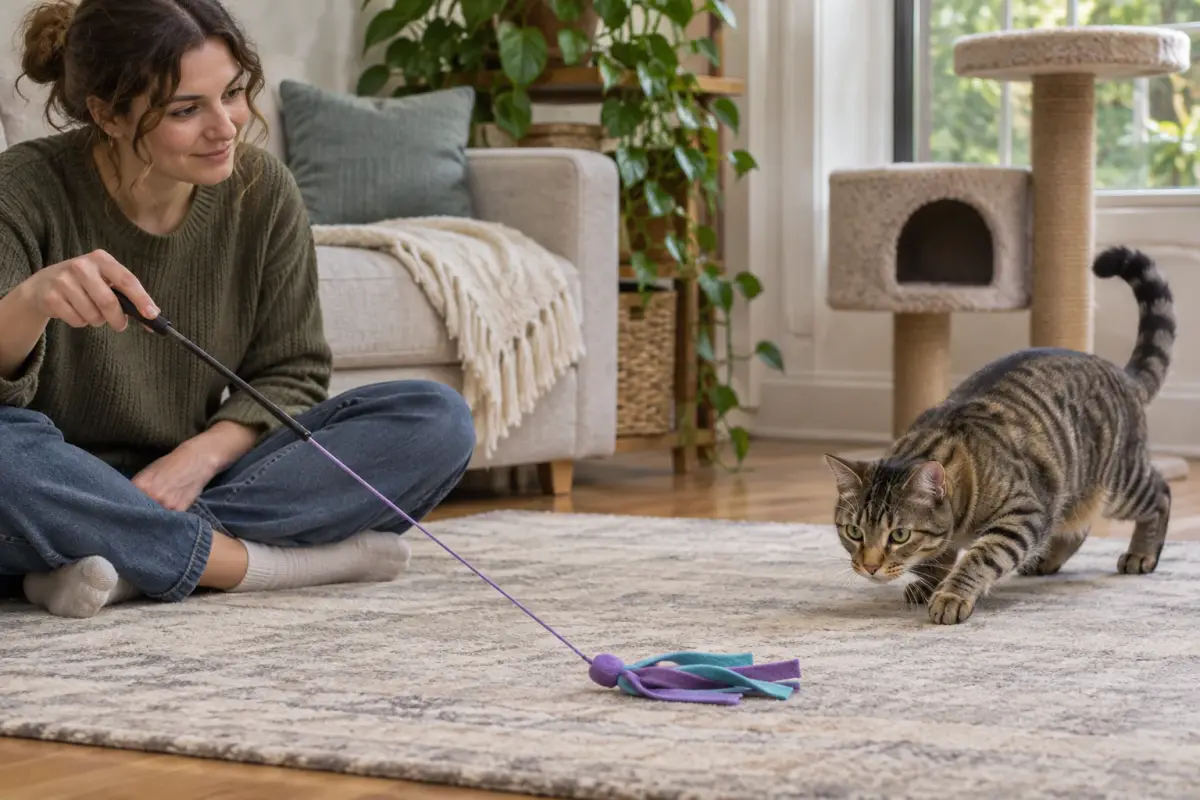
VCA suggests encouraging play during the day and evening to reduce nighttime episodes. A good routine is an active play session in the evening with a wand toy, letting your cat catch the toy at the end, followed by a meal. That mimics a natural hunt, eat, groom, sleep cycle.
Zoomies after the litter box
Some cats sprint out of the litter box as if something were chasing them. VCA mentions that some cats have a short burst of zoomies after using the box. Nobody knows exactly why. It may be relief, a burst of energy, or an instinct to move away from the scent of their waste so predators cannot find them.
Occasional post-litter-box sprints in a healthy cat are nothing to worry about. However, if your cat seems distressed, cries in the box, strains, goes very often or has diarrhea or constipation, the dash may be about discomfort. Those signs need a vet, and a male cat straining with little urine needs emergency care.
How to manage zoomies
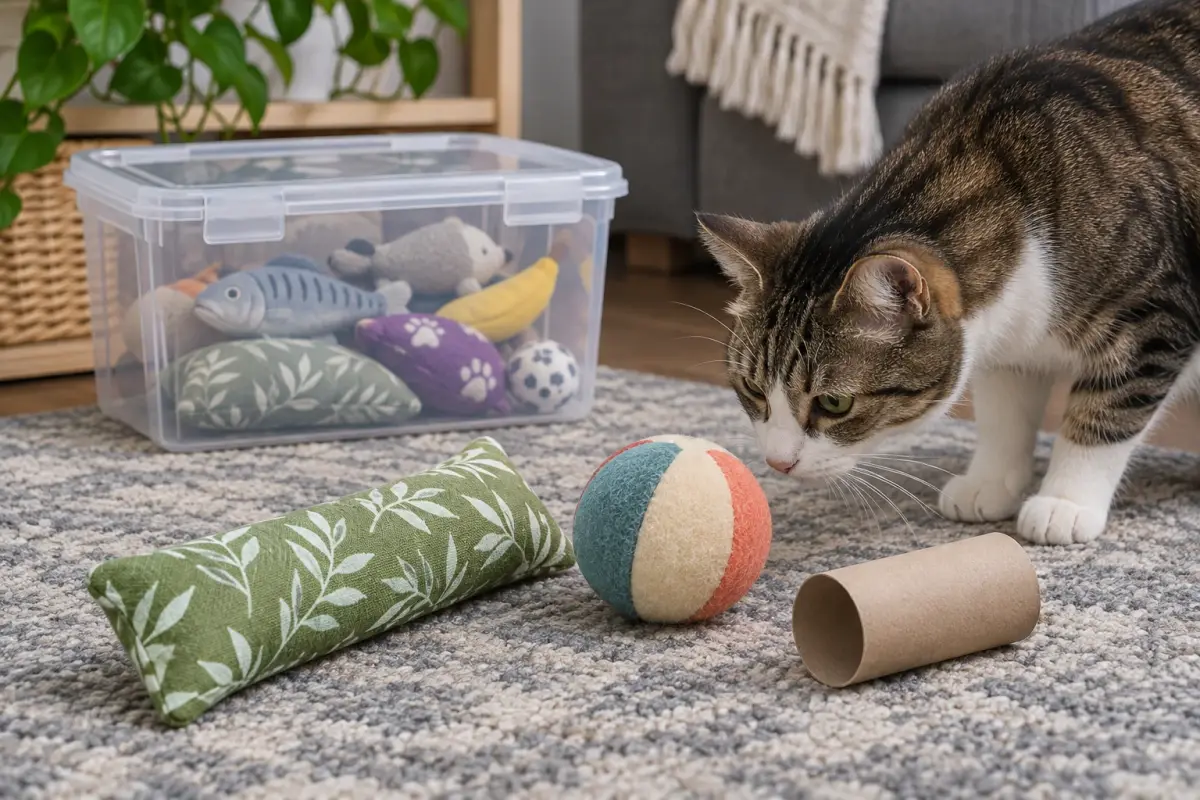
The goal is to channel energy, not stop it. VCA suggests encouraging natural hunting behaviors with fetch, chasing treats or toys. Two or three short, active play sessions a day with a wand toy work well. Puzzle feeders, cat trees, window perches and rotating toys keep the brain busy between sessions.
Make the space safe. Move breakable items off shelves, keep cords tidy, and close off dangerous areas. Some cats get zoomies after catnip, which is fine. If you use a laser pointer, finish by letting your cat catch a real toy or treat, so the hunt has an ending, and never shine it in the eyes.
When zoomies might be a concern
Talk to your vet if your cat's activity level has risen abnormally, if your cat seems unable to settle, or if they become aggressive during episodes. VCA notes that medical conditions such as hyperthyroidism, which is common in middle-aged and older cats, can contribute to hyperactivity, often along with weight loss and a bigger appetite.
Also see your vet if zoomies come with skin rippling along the back, frantic biting at the tail or flanks, or apparent distress, which can point to skin problems or a rare sensitivity condition. A cat that runs into things, falls or seems disoriented needs a prompt checkup.
This page is general information, not veterinary advice, and it cannot replace an examination by the vet who knows your pet.
Common questions
Are cat zoomies normal?
Yes. Short bursts of running and pouncing are normal, especially in kittens and young cats. They usually come from stored-up energy and hunting instinct. Regular daily play is the best way to keep them manageable.
Why does my cat get the zoomies at night?
Cats are naturally most active at dawn and dusk, and many sleep through the day while home is quiet. An evening play session followed by a meal helps use up energy so your cat is more likely to sleep through.
Why does my cat run after pooping?
Some cats sprint from the litter box after using it, possibly from relief or instinct. It is usually harmless. If your cat cries, strains or has diarrhea or constipation, see your vet in case the dash is about discomfort.
Should I worry if my older cat suddenly has zoomies?
A sudden increase in energy in a middle-aged or older cat can be a sign of hyperthyroidism, especially with weight loss and a big appetite. Mention it to your vet, who can check with a simple blood test.
Sources we checked
This guide is general information, not veterinary advice. If your pet is unwell or injured, contact your veterinarian.