






Breeds
Cardigan Corgi vs Pembroke Corgi: How the Two Breeds Differ
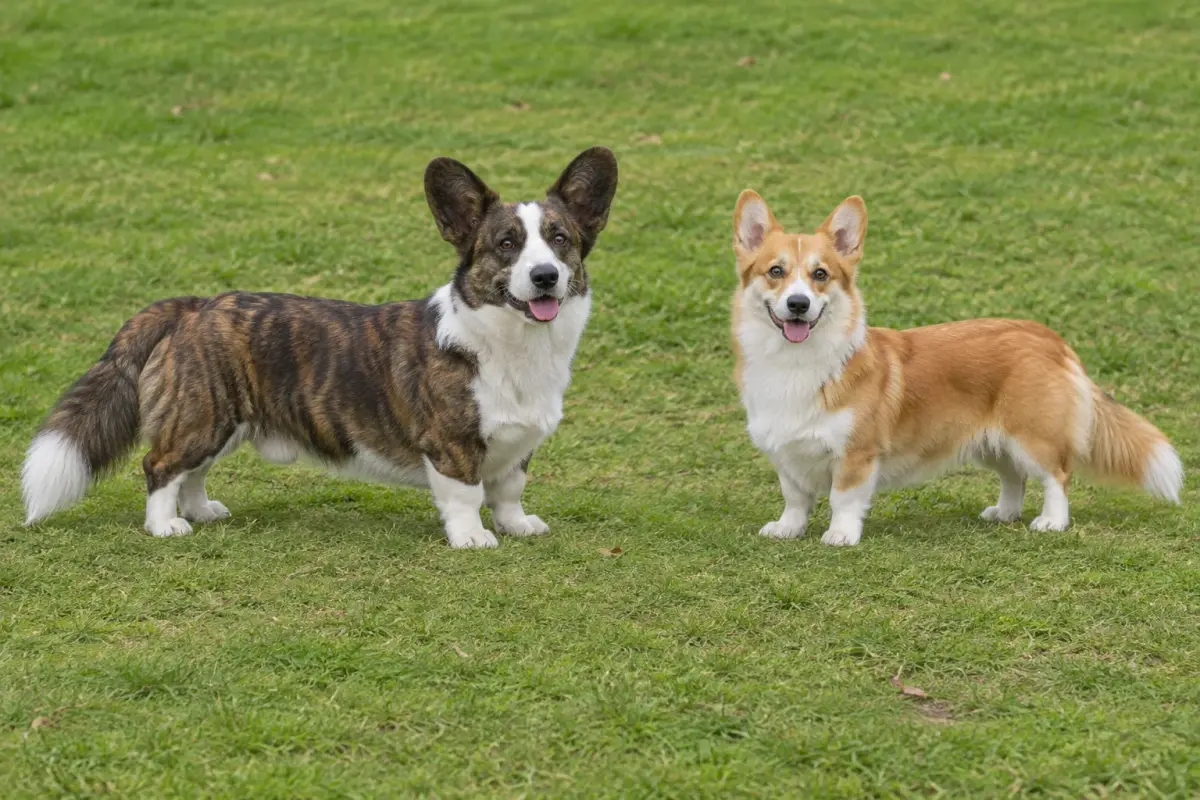
The Cardigan and the Pembroke are separate breeds, not two types of one corgi. The Cardigan is the heavier, longer-bodied dog with a long, fox-like tail and colors including blue merle and brindle; the Pembroke is lighter, a little more outgoing and far more popular, ranking 15th in the AKC list against the Cardigan's 60th. Both are smart, vocal cattle-herding dogs that need daily exercise and care for their long backs.
By Matt GarnettUpdated November 14, 20264 min read4 sources
Side by side
Size: the AKC lists Cardigans at 10.5 to 12.5 inches and 25 to 38 pounds, and Pembrokes at 10 to 12 inches and up to 30 pounds. Lifespan: AKC gives Cardigans 12 to 15 years and Pembrokes 12 to 13. Tail: VCA describes the Cardigan's long, fox-like tail as a defining feature. Colors: VCA lists red, sable, brindle, black or blue merle for Cardigans, often with white. Coat: both have medium-length double coats that shed seasonally.
Energy: VCA rates Cardigans moderate to high, and says Pembrokes need a long walk or short run daily. Temperament: Pembrokes are described as fun-loving and moderately outgoing; Cardigans as loyal and sometimes reserved with strangers. Training: both learn quickly and do best with rewards. Children: both are good with kids but may nip at heels. Best for: active owners who want a big dog's personality in a small, sturdy body.
Two breeds from Wales
VCA explains that corgis were used to drive cattle, gather geese and chickens, herd sheep and ponies and guard farms, with their short stature letting them duck under kicking hooves. Pembrokes and Cardigans were first shown as one breed in 1926, despite almost certainly coming from different stock. The AKC recognized the Pembroke in 1934, after the first corgis reached America in the early 1930s.
The Cardigan is described by VCA as an ancient breed developed in Wales for driving cattle and guarding property. The AKC calls it a masterpiece of the breeder's art, perfectly suited to moving cattle yet so congenial and sweet-faced it would be cherished even if it never worked. The Pembroke's fame owes much to Princess Elizabeth, later Queen Elizabeth II, who acquired her first Pembroke in 1933.
How to tell them apart
Start with the tail. A Cardigan has a long, fox-like tail that gives it a distinct profile, per VCA. Next, check the color: blue merle and brindle point to a Cardigan, since VCA lists those among Cardigan colors. Cardigans are also heavier for their height; a male can weigh up to 38 pounds, while the AKC caps Pembroke males at about 30.
Overall shape helps too. Both are long and low, but the Cardigan tends to look longer and more heavily boned, while the Pembroke looks a little lighter and more compact. If you are unsure about a dog in a shelter, its paperwork, a DNA test or a breed-savvy vet can help, since mixes are common.
Temperament and training
VCA describes the Pembroke as biddable and fun-loving, gentle and playful with children, moderately outgoing with strangers and good with other dogs and pets. It is willing to please and learns quickly with food or play rewards. Many nip at heels when excited, and some bark a lot. The AKC calls it one of the most agreeable small housedogs, affectionate without being needy.
Cardigans are intelligent, confident and loyal, according to VCA, often alert and reserved with unfamiliar people. Herding instinct can show as nipping or trying to control movement, and without structure they may become vocal. For both breeds, redirect heel-nipping into a toy, teach a reliable quiet cue, and keep training short, positive and varied, since these are smart dogs that bore easily.
Exercise and back health
Corgis are working dogs in small bodies. VCA says the Pembroke needs a long walk or short run every day, plus vigorous games, and is not a breed for an inactive owner; a well-fenced yard is essential. Cardigans need regular daily exercise too, but VCA advises moderating high-impact activity because their long backs and short legs are vulnerable.
VCA flags back problems, including intervertebral disc disease, and degenerative myelopathy as concerns in Cardigans, and notes Pembrokes tend to gain weight. Extra pounds strain a long spine, so measure meals, limit jumping off furniture, and use ramps where you can. Call your vet promptly if a corgi suddenly yelps, refuses stairs or walks unsteadily.
Grooming, health and which to choose
Both coats need weekly brushing and more during heavy seasonal sheds. VCA also lists hip dysplasia, retinal dysplasia, progressive retinal atrophy, lens luxation and congenital heart disease among Cardigan concerns. Ask breeders for hip and eye screening and about degenerative myelopathy in their lines, for either breed, and keep up regular vet checkups.
Choose a Pembroke if you want a slightly lighter, sociable corgi that is easy to find from breeders and happy with most people. Choose a Cardigan if you like a sturdier, more reserved dog with a long tail and a wider choice of colors, and are happy to wait for a puppy from a less common breed.
This page is general information, not veterinary advice, and it cannot replace an examination by the vet who knows your pet.
Common questions
Which is bigger, a Cardigan or a Pembroke Corgi?
The Cardigan. The AKC lists Cardigans at 25 to 38 pounds and 10.5 to 12.5 inches, while Pembrokes weigh up to about 30 pounds at 10 to 12 inches. Cardigans are heavier-boned for their height.
How can you tell a Cardigan from a Pembroke?
Look at the tail and color. Cardigans have a long, fox-like tail and come in colors that include blue merle and brindle, per VCA. Pembrokes are lighter and more compact, and are far more common.
Are corgis good with kids?
Generally, yes. VCA describes Pembrokes as gentle and playful with children and Cardigans as generally good with supervision. Both may herd and nip at heels, so teach kids not to run from the dog.
Did the Queen have Cardigan or Pembroke Corgis?
Pembrokes. VCA notes that Princess Elizabeth acquired her first Pembroke Welsh Corgi in 1933, and her corgis went on to become the best-known corgis anywhere in the world.
Sources we checked
This guide is general information, not veterinary advice. If your pet is unwell or injured, contact your veterinarian.