






Buying guides
Best Pet Doors for Cats: What Actually Matters
The best pet door for a cat is one that matches your cat's size, fits your door or window, and locks when you need it to. First decide whether your cat should have outdoor access at all, because vets and humane groups point to real risks outside. Three things then decide the door: the type, the fit and the locking.
By Matt GarnettUpdated November 13, 20264 min read3 sources
Decide first whether the door should lead outdoors
A cat door is a decision about your cat's safety before it is a hardware choice. VCA Animal Hospitals says outdoor cats are more likely to be injured or to get sick than indoor cats, with risks from cars, dogs, wildlife such as coyotes, feline leukemia and FIV, fleas, ticks and mites, and weather extremes. The Humane World for Animals says a collar with identification tags and a microchip help reunite a lost cat with its owner.
If you decide on outdoor access, a door that leads into a fenced yard or an enclosed run keeps most of the benefit with less risk. Our cat doors suit either setup, and the sections below explain how to choose between them.
Safer middle options: catios, harnesses and window time
VCA describes a catio, an enclosure attached to a window or door, as one way to give a cat safe outdoor access, and says most cats can learn to walk on a cat-safe harness and leash with patient training. The Humane World for Animals also names the catio and leash walking as safer ways for a cat to enjoy the outdoors.
A cat door can lead into a catio, which gives you daily independence for your cat without roaming. A cat door for a window, such as an adjustable window cat door, is one way to connect a room to an enclosure. If you want to keep your cat inside, VCA suggests puzzle feeders, daily play sessions and cat trees placed in family areas, and you can browse cat trees for that purpose.
Door, wall or window: choosing the type
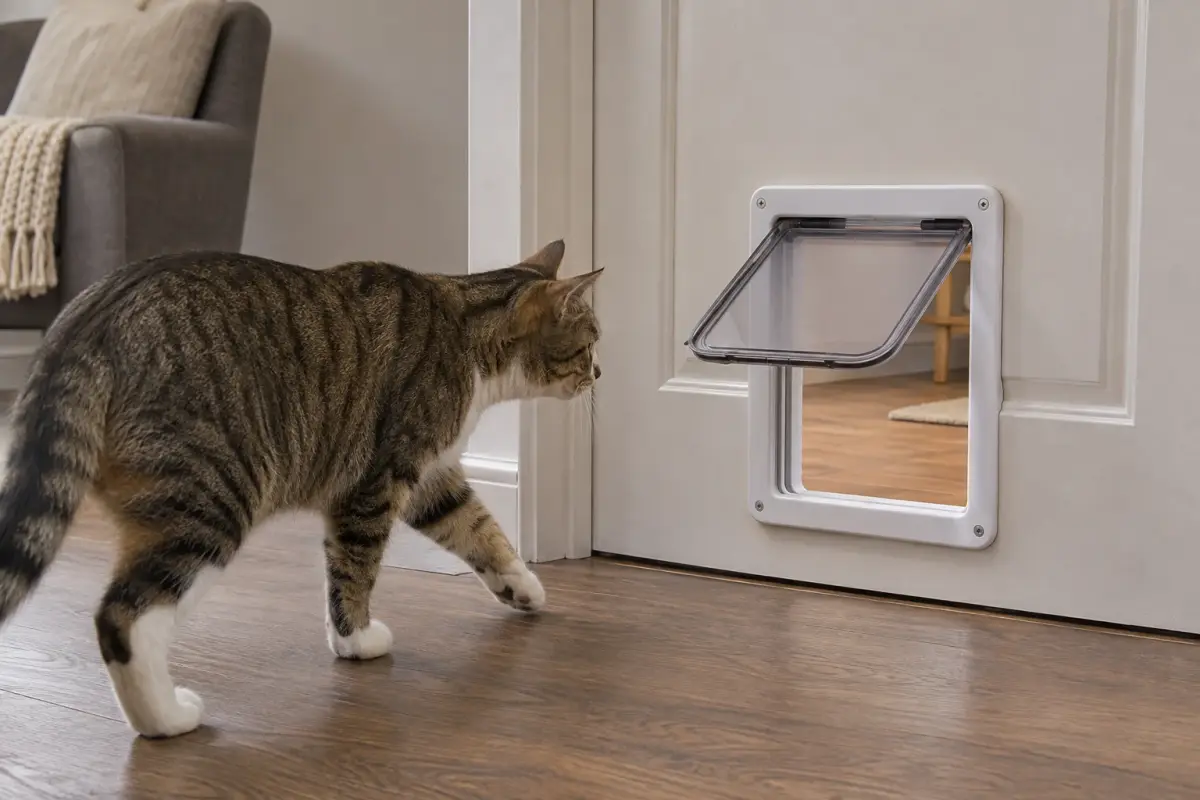
Cat flaps fit into an exterior door, a wall or a window panel. Which you choose depends on where the cat's route is, whether you rent, and whether the door is glass or solid. A flap that fits a hollow or thin door will not work for a thick wall without a tunnel, so measure the thickness and the cutout before you decide.
Many designs offer locking positions so you can allow in only, out only, both or neither. A 4-way lockable cat flap is an example of that idea, and it lets you shut the flap overnight or during a vet visit. A simple round design, like a round pet door, is easy to fit but offers little control, so it makes more sense behind a closed yard or run.
Size and fit for your cat
Measure your cat, not the box. Check the width across the shoulders and the height from the floor to the top of the back, and compare both with the flap opening listed for the door. A flap that is too tight is a squeeze and discourages use, while one that is far too large lets in larger animals.
Weigh whether your cat is a kitten that will grow, or a senior with stiff joints. Step height matters for older cats, because a high threshold is hard for a cat with arthritis. VCA's advice on keeping outdoor kittens up to date on vaccines and parasite preventives applies to any cat that will use the door.
Security, weather and training
A cat door is also a hole in your house. Choose a model with a firm closing flap, a lock for nights and travel, and a frame that seals well against drafts. A 4-way lockable pet door in ABS plastic is the kind of design to look at if locking matters most. Never leave an unlocked door where another animal could come in.
Training a cat to use a new flap takes patience. Prop the flap open at first, reward each pass, and close it a little at a time. If your cat will not use it after a few weeks, do not force it. Not every cat takes to a flap.
What to avoid, and when to see your vet
Avoid fitting a flap before you have a plan for identification and vaccinations, and avoid cheap flaps that do not lock. Keep your cat's microchip details current and add an ID tag. Keep any cat that goes outside up to date on vaccines and parasite prevention, and check with your vet about what your area requires.
See your vet if your cat comes in injured, limping or with a wound, or if it is losing weight or seems unwell. When you are ready to choose, browse our cat doors.
This page is general information, not veterinary advice, and it cannot replace an examination by the vet who knows your pet.
Common questions
Are cat doors safe for indoor cats?
A cat door is safe when it leads to a protected space such as a catio or a fenced run. A door to open outdoors exposes a cat to the risks VCA lists, including cars, wildlife and disease.
How do I choose the right size cat door?
Measure your cat's shoulder width and height and compare both with the flap opening. Leave room to pass comfortably, and consider whether a kitten will grow or a senior needs a low step.
Can I use a cat door in a window?
Yes, window-fitted designs exist for rooms where the door cannot be cut. Check the thickness of the frame and glass, and consider connecting it to an enclosure so the cat stays safe.
Should my cat wear ID if it uses a cat door?
Yes. Humane World for Animals says a collar with identification tags helps reunite a lost cat with its owner, and it also recommends a microchip alongside the collar.
How do I get my cat to use a new cat flap?
Prop the flap open at first, reward each pass, and close it gradually. Go slowly, and if your cat remains afraid after a few weeks, stop and try again later.
Sources we checked
This guide is general information, not veterinary advice. If your pet is unwell or injured, contact your veterinarian.

