Buying guides
Best Gerbil Cages: What Actually Matters
The best gerbil cage has a solid floor, room for deep bedding, a secure lid and enough space for every gerbil living in it. Gerbils dig, chew and escape, so a tank or a deep-based cage with a safe solid wheel beats a shallow wire cage. Choose by floor, depth and security first, and extras like tubes and tiers last.
By Matt GarnettUpdated November 14, 20265 min read2 sources
What a gerbil needs from its home
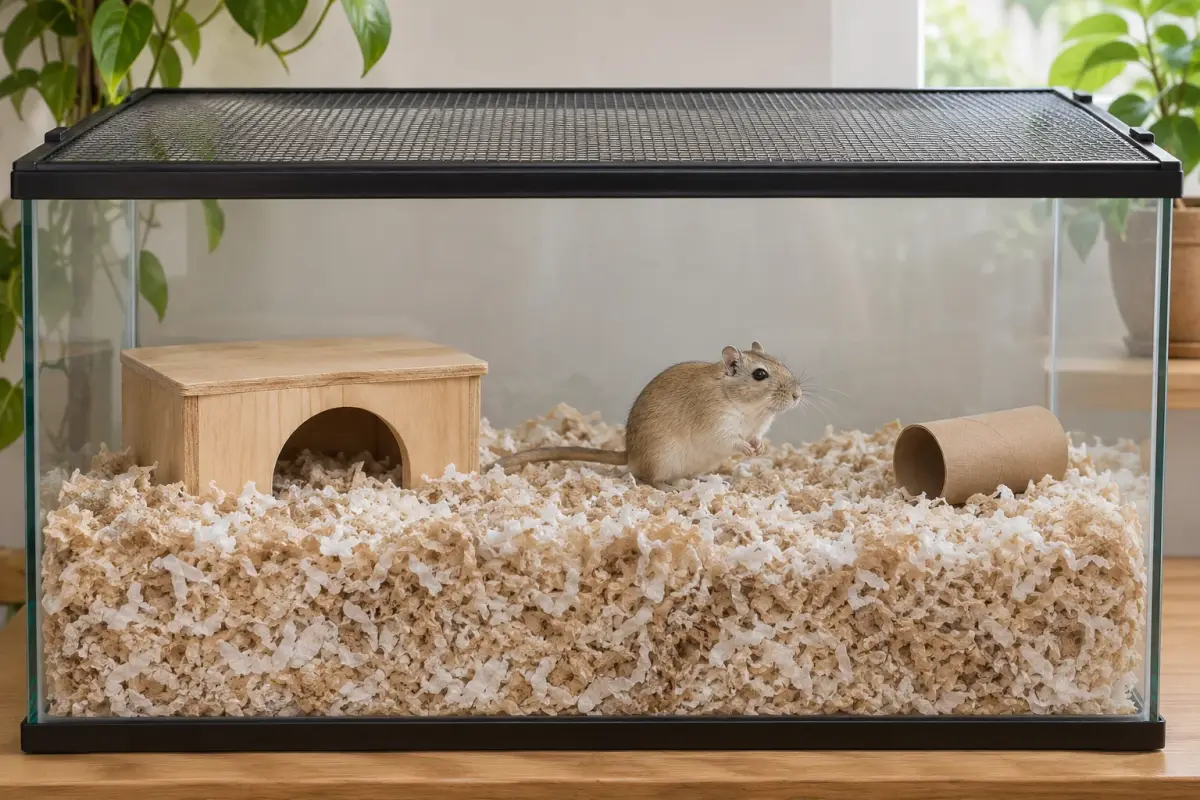
Gerbils are burrowing, chewing, standing-on-their-hind-legs animals, and the right home is built around those habits. The Merck Veterinary Manual says gerbils must be kept in a cage with a solid, non-mesh bottom because they often stand up on their hind legs, and that the cage should be filled about one-third deep with bedding so they can dig and hoard food. When you browse gerbil cages, check those two features before anything else.
Security and cleaning come next. The same source says a gerbil home should be secure enough to prevent escape and easy to keep clean, and VCA Animal Hospitals adds that all pet rodents are escape artists. A cage that looks roomy but has a loose lid, wide gaps or a shallow base fails the basic test, however many tubes and levels it offers.
Tank or wire: the main types compared
A glass tank is the easiest way to hold deep bedding. Merck states that an ordinary fish tank with a breathable mesh lid makes an excellent gerbil home, and VCA says a glass aquarium works if it has a lockable, escape-proof wire or screen top. Tanks are heavy, so choose a spot before you fill one, and make sure the lid fits tightly and lets air through.
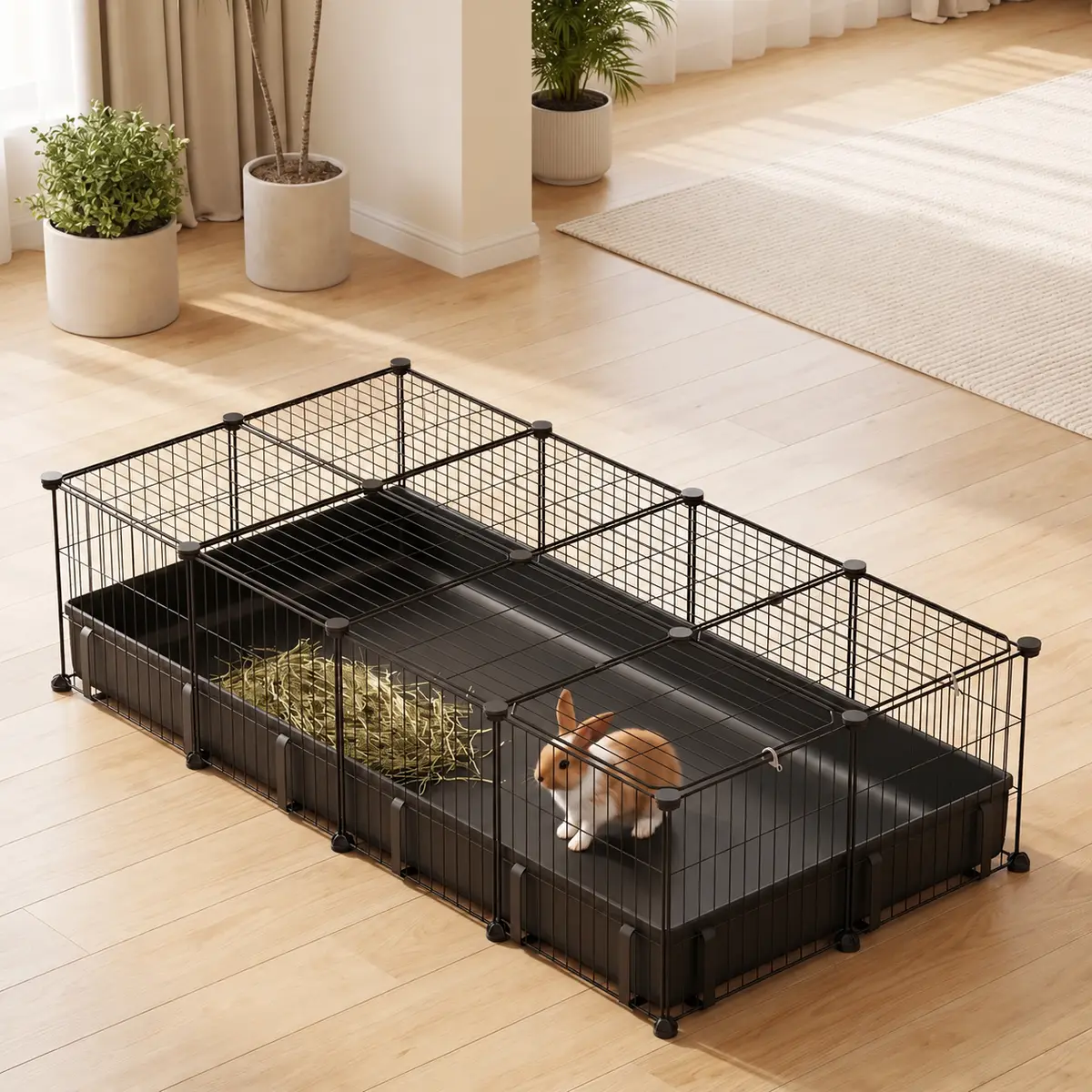
A wire cage can work if it has a deep solid base that actually holds bedding. A tiered wire habitat, such as this wire rodent habitat, is the type to compare against that rule: look for a tall tray, bar spacing too narrow to squeeze through, and a latch a gerbil cannot lift. VCA notes that wooden cages are not suitable, since rodents chew through wood and it cannot be disinfected well.
How much space to allow
Merck gives a rule of thumb of about 5 gallons per gerbil, with at least a 5-gallon tank for one, and more space for each additional gerbil. VCA suggests at least 10 gallons for hamster- or gerbil-sized rodents in a glass aquarium and says the bigger the cage, the better, since rodents need room to exercise and explore. Treat those numbers as floors, not targets.
Bigger is more practical than it sounds, because a larger floor lets you give each gerbil a burrowing area, a hide, a wheel and a chew station without crowding. A larger habitat such as a 29.5-inch wire cage gives more floor area than a compact one, though you still need a deep base to hold bedding.
Bedding, wheels and what goes inside
Deep, absorbent, paper-based bedding is the best fit. VCA says paper-based bedding is best and that cedar shavings are the least desirable wood bedding because their oils irritate the airways, and Merck warns that cedar and untreated pine contain oils that may be toxic to small animals. Gerbils especially enjoy chewing paper, so cardboard tubes and boxes make cheap, replaceable enrichment, though you will need to renew them often.
Choose a wheel with a solid running surface. Merck cautions that the slats in a traditional wheel can catch a gerbil's feet or delicate tail, and VCA says the safest wheel has a solid plastic floor with no openings. Many tiered cages come with a built-in wheel, such as this gerbil and dwarf hamster cage with tubes and a wheel, so check that the included wheel meets the solid-surface standard or plan to swap it.
Tubes, tiers and extras: useful or not
Tubes and extra levels look appealing, but they are a bonus, not a substitute for floor space and bedding depth. Every added level takes room away from the deep digging area gerbils actually use, and plastic tubes can be hard to clean. A tiered unit such as a 5-tier cage with a wheel and water bottle can suit a gerbil only if the lowest level is deep and solid enough to burrow in.
Keep an eye on gnawing: any plastic part a gerbil chews through should be replaced, and parts small enough to swallow are a risk. Merck advises not choosing anything with pieces that may be harmful if swallowed. Place the cage out of direct sun and drafts; Merck says living quarters should be 60 to 70 degrees F and relatively dry.
Cleaning, company and what to avoid
VCA recommends spot-cleaning daily and changing all the bedding weekly, while Merck sets a minimum of cleaning and disinfecting at least once every two to three weeks. A cage you can open wide and wipe down quickly will actually get cleaned. Poor ventilation lets ammonia from urine build up, which VCA calls a major cause of respiratory disease.
Gerbils are territorial. Merck recommends pairs, ideally same-sex littermates, while VCA warns that adults introduced for the first time will fight, often to the death, so never add a new adult to an established gerbil. Avoid wooden cages, shallow wire trays, wire wheels and anything cedar. Have a vet who sees small mammals look at any new gerbil, and call your vet if one is sneezing, sluggish or has wet fur around the tail.
When you are ready to compare habitats, head to our gerbil cages, and see hamster wheels for solid-surface options and hamster bedding for paper-based bedding.
This page is general information, not veterinary advice, and it cannot replace an examination by the vet who knows your pet.
Common questions
Is a tank or a wire cage better for gerbils?
A glass tank with a secure mesh lid is the simplest way to hold deep bedding, and both Merck and VCA support it. A wire cage can work if its solid base is deep enough for burrowing.
How deep should gerbil bedding be?
The Merck Veterinary Manual says the cage should be filled about one-third deep with bedding so gerbils can dig and hoard food. Paper-based bedding is recommended; avoid cedar and untreated pine.
Can gerbils live together?
Pairs of same-sex littermates are recommended by Merck. VCA warns that unfamiliar adults introduced to each other will fight, often to the death, so bond gerbils young and do not separate a bonded pair.
What kind of wheel is safe for a gerbil?
One with a solid running surface. Merck warns that slats can catch a gerbil's feet or tail, and VCA says the safest wheel has a solid plastic floor with no openings.
Sources we checked
This guide is general information, not veterinary advice. If your pet is unwell or injured, contact your veterinarian.