






Buying guides
Best Dry Shampoo for Dogs: How to Choose a Waterless Formula
The best dry shampoo for a dog is a gentle, dog-specific waterless foam or spray, lightly scented or fragrance-free, that you can rub in and towel off. Foams suit most coats and spot cleaning; sprays suit quick refreshes; powders suit dense coats but can be dusty. Dry shampoo is a between-baths tool for small messes, travel and dogs that cannot be bathed, not a replacement for a real bath.
By Matt GarnettUpdated November 10, 20264 min read2 sources
What matters most: a dog-safe formula and the right format
Dogs lick their coats, so whatever you leave behind ends up being swallowed. That makes a dog-specific formula essential. The AKC advises against human products, which are made for a different skin pH, and notes that artificial fragrances and dyes can irritate sensitive skin. A waterless shampoo that is designed to be left on, or toweled off, without rinsing is the safest choice. Browse our dry shampoo for dogs and the wider range of dog shampoo.
Format comes second. Foams are easy to control, work into the coat without dust and suit spot cleaning paws, faces and bottoms. Sprays mist over a larger area for a quick refresh. Powders absorb oil in dense coats but can be dusty, so keep them away from your dog's face and breathing.
Foam, spray, powder and wipes compared
Waterless foams are usually the most versatile: dispense into your hand, massage into the coat, then towel and brush out. They handle light dirt and odor well. Sprays are fastest for a whole-body refresh on a short coat but can leave a damp, sticky feel on thick coats if overused. Powders and dry-brush products absorb grease and suit double coats between baths.
Grooming wipes are another waterless option for paws, faces and quick cleanups. Soothing pet skin wipes and disposable pet grooming wipe gloves are two examples. Look for alcohol-free, fragrance-light wipes made for pets. Whatever the format, the cleaning power is limited: none of them will remove deep mud, skunk spray or anything your dog has rolled in. Those need water.
Best dry shampoo for each situation
For travel, camping and road trips, a foam plus pet wipes covers most small messes. For senior dogs, dogs recovering from surgery and dogs that should not get wet, a gentle waterless foam lets you freshen them safely, as long as your vet has not asked you to keep a wound or incision completely dry and untouched.
For puppies too young or nervous for a full bath, a mild foam helps with small accidents. For thick double coats, a dry powder or foam worked in with a slicker brush refreshes between deshedding baths. For flat-faced breeds, use foam on a cloth for the facial folds rather than spraying near the nose.
What to avoid
Avoid human dry shampoos, which often contain aerosol propellants, alcohol and fragrances not meant to be licked. Avoid baby powder or talc. Avoid strong essential-oil formulas unless they are made for dogs. Avoid spraying near your dog's eyes, nose or mouth, and never use a cat product on a dog or a dog product on a cat without checking the label.
Avoid using dry shampoo to cover a smell that keeps coming back. Persistent odor, greasy patches, flaking, redness or itching usually point to skin, ear or dental problems rather than dirt, and your vet can find the cause.
How to use a waterless shampoo well
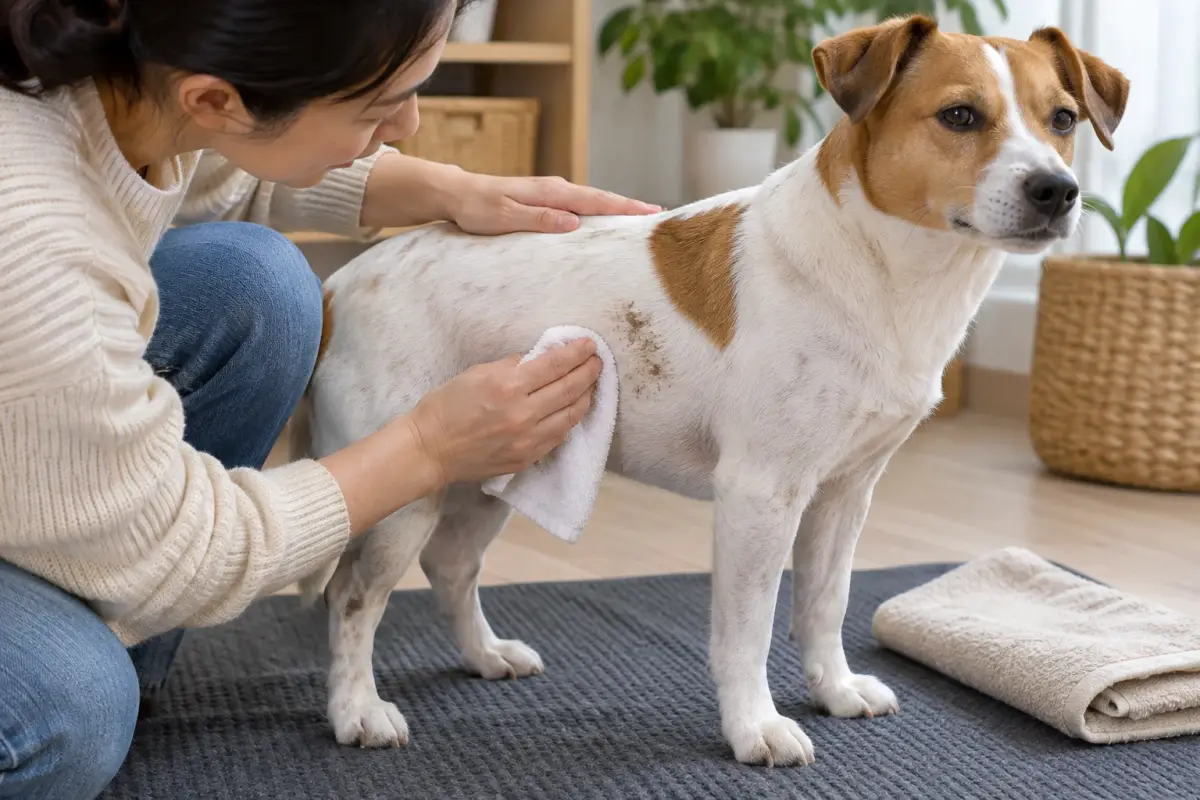
Brush out loose hair and tangles first. Apply foam or spray against the direction of hair growth so it reaches the skin, then massage it in with your fingers for a minute or two. Towel off firmly, which lifts dirt and oil, then brush the coat through to remove any residue.
Focus on the areas that get dirty: paws, belly, chest, beard and bottom. Use a damp cloth for the face. For a dog that dislikes sprays, put product on a cloth or your hands first. Reward calm behavior; quick, pleasant sessions make grooming easier later.
How often to use it, and storage
Use dry shampoo for spot cleaning as often as needed, and for whole-body refreshes no more than every week or two, with a proper bath every few weeks to a month for most dogs. Brushing several times a week removes much of the dirt and oil that causes odor in the first place.
Store bottles at room temperature with the cap closed, and check the expiry date. Browse dog shampoo and dry shampoo for dogs when you need a refill. If your dog's skin turns red, flaky or itchy after a product, stop using it. A product that leaves a sticky coat is either too much or the wrong formula for your dog's coat type.
Common questions
Is dry shampoo safe for dogs?
Dry shampoos made for dogs are generally safe when used as directed. Avoid human dry shampoos, talc and heavily scented products, and keep sprays away from the face.
What is the best waterless dog shampoo?
A gentle, lightly scented or fragrance-free foam made for dogs suits most coats. It controls easily, works without dust and is ideal for paws, faces and small messes.
Can dry shampoo replace a bath?
No. It handles light dirt and odor between baths. Mud, skunk spray and heavy soiling need water, and most dogs still need a proper bath every few weeks to a month.
Can I use dry shampoo on a dog after surgery?
Ask your vet first. Many vets want incisions kept dry and untouched. A gentle waterless foam on areas away from the wound can freshen a recovering dog once your vet agrees.
Sources we checked
This guide is general information, not veterinary advice. If your pet is unwell or injured, contact your veterinarian.


