






Buying guides
Best Donut Dog Bed: How to Choose a Round Cuddler Bed
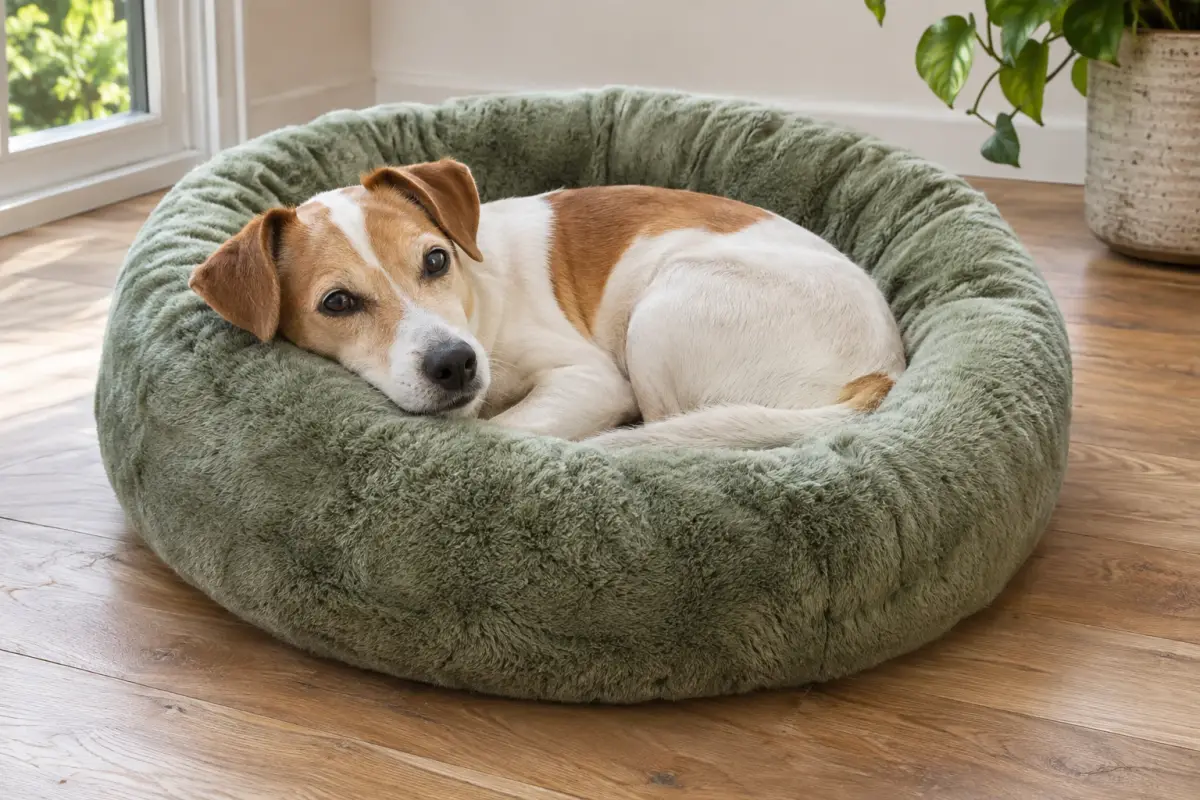
A donut bed suits dogs that sleep curled in a ball and like to lean their head on something. The best one is sized to your dog curled up with room to spare, has a removable or fully machine-washable design, and a base thick enough that the dog does not sink to the floor. It is a poor match for sprawlers, heavy chewers and dogs that need firm joint support.
By Matt GarnettUpdated November 14, 20263 min read2 sources
Who donut beds suit
Round, raised-rim donut dog beds work best for dogs that curl up, burrow or press against something while they sleep, which many small and medium dogs do. The AKC notes bolster-style beds can help dogs that move a lot in their sleep stay put, and the soft rim gives a head rest.
They suit dogs that seek warmth and security, such as small breeds in cold homes. They suit large dogs that sleep stretched out far less well, because the rim takes up much of the bed's footprint.
What matters most: size and base
Measure your dog curled up asleep, across the widest point, and add several inches; for dogs that sometimes stretch, size up again. Check the inside diameter, not the outside, because a thick rim can halve the usable space.
The base matters for support. Many donut beds are filled only with loose fiber, which flattens and lets a heavier dog sink to the floor. A firm base layer or foam insert under the cushion helps, and matters more as dogs age.
Fabrics and washing
Long faux fur feels soft and warm and is what most donut beds use, but it traps hair, mats after washing and is easily chewed. Short-pile plush and sherpa are easier to keep clean. Waterproof or water-resistant bases protect floors from accidents.
Washability decides how long a donut bed stays pleasant. Choose one that is fully machine-washable or has a removable cover, and check that it fits your washer. Dry on low heat or air dry so the fill does not clump.
Best type for each dog
For small dogs and cats-at-heart that burrow, a donut bed with a hood or attached blanket. Our range includes a round plush nest bed, an oval bolstered nest bed and a faux-fur donut calming bed. For a medium curled sleeper, a large donut with a firm base. For an older dog, a donut with a foam base or a low-rim bolster bed, so stepping in is easy and joints are supported.
For a puppy, a washable, inexpensive donut you do not mind replacing; the AKC's advice is to remove any bed a puppy destroys. For a large dog that sprawls, choose a mattress or orthopedic bed instead.
What to avoid
Avoid donut beds for dedicated chewers; long fur and loose fill are easy to rip out and swallow, which can block the gut. Avoid beds that cannot be washed, and beds sized so small your dog hangs over the rim.
If your dog suddenly starts curling much more tightly, avoids lying down, or seems stiff getting up, it may be cold or in pain; check the room temperature and talk to your vet if it continues.
Care and lifespan
Shake out and vacuum the bed weekly and wash it every one to two weeks. Fluff the rim after washing. For more on sleep habits, see why dogs dig in their beds and why dogs circle before lying down.
Replace a donut bed when the base stays flat, the fill clumps, or the fabric tears. Cheap donut beds may last a year; better-made ones with foam bases last longer.
This page is general information, not veterinary advice, and it cannot replace an examination by the vet who knows your pet.
Common questions
Are donut beds good for dogs?
They are good for dogs that curl up and like to lean or burrow. They are less suitable for large sprawlers, heavy chewers and dogs that need firm orthopedic support.
What size donut bed should I get?
Measure your dog curled up asleep and add several inches, using the inside diameter rather than the outside size. Size up if your dog sometimes stretches out.
Can donut dog beds be washed?
Many are fully machine-washable or have removable covers. Check that the bed fits your washer, use a gentle cycle, and air dry or tumble on low so the fill does not clump.
Are donut beds good for older dogs?
Choose one with a firm foam base and a low rim for easy entry. Beds filled only with loose fiber may not give enough support to stiff joints.
Sources we checked
This guide is general information, not veterinary advice. If your pet is unwell or injured, contact your veterinarian.


