






Buying guides
The Best Dogs for Cats: Breeds Most Likely to Live in Peace
The dogs most likely to get along with cats are calm, friendly companion and sporting breeds: the AKC names the Basset Hound, Beagle, Bulldog, Cavalier King Charles Spaniel, Collie, Golden Retriever, Labrador Retriever, Papillon and Pug. Terriers, sighthounds and some herding dogs are riskier because they were bred to chase. Breed only shifts the odds, though: early socialization, slow introductions and a cat escape route matter more.
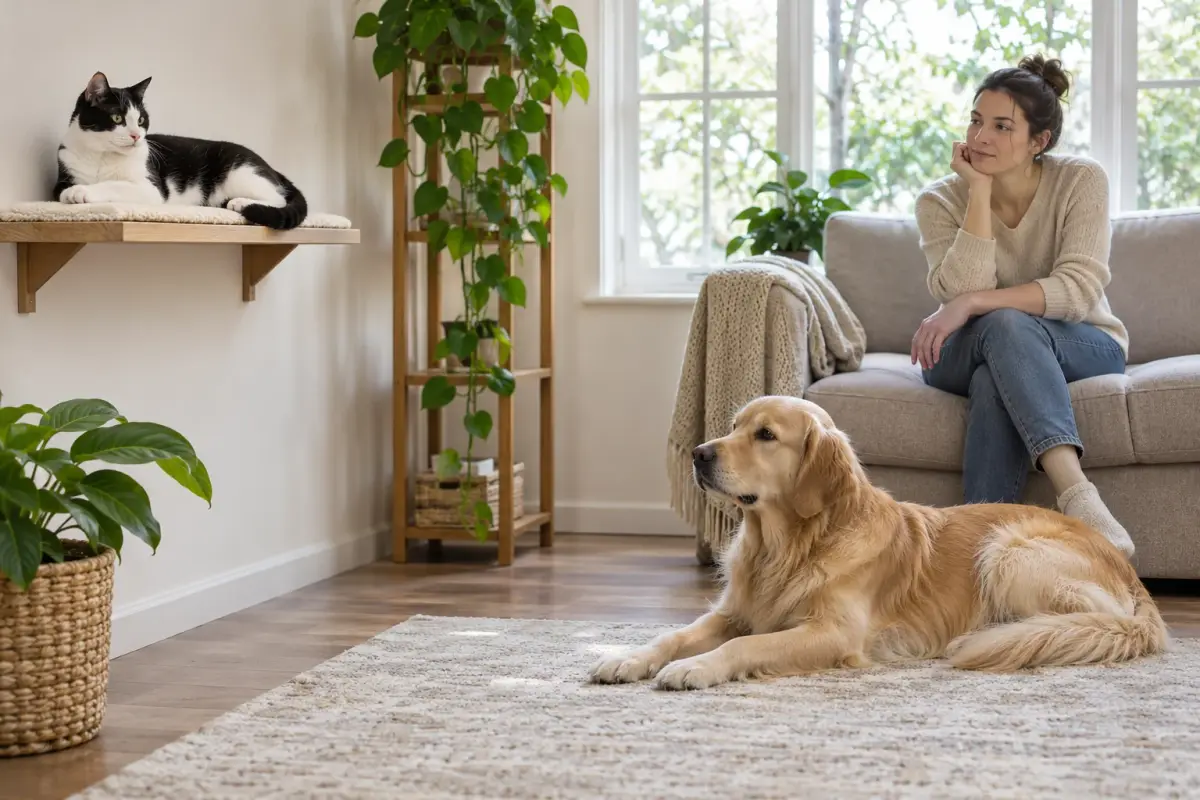
By Matt GarnettUpdated November 14, 20264 min read4 sources
Side by side
Sizes are from AKC breed profiles. Cavalier King Charles Spaniel: 13 to 18 pounds, gentle and fond of other animals. Papillon: 5 to 10 pounds, about cat-sized and curious. Pug: 14 to 18 pounds, sociable and sturdy. Bulldog: 40 to 50 pounds, easygoing. Basset Hound: 40 to 65 pounds, patient and low-key. Beagle: under 20 to 30 pounds, a pack hound friendly with other animals.
Larger options: Labrador Retriever, 55 to 80 pounds, and Golden Retriever, 55 to 75, both outgoing with everyone; Collie, 50 to 75 pounds, a herding breed known for tolerance of family pets. Energy: lowest in Bassets, Bulldogs and Pugs; highest in Labs, Goldens, Collies and Beagles. Watch-outs: Beagles may chase scents, Collies may try to herd, and big puppies can be clumsy. Best for: a calm cat suits a calm dog.
Which breed groups tend to do best
The AKC's guide to dogs and cats explains that the Toy Group was bred for companionship and tends to be affectionate and sociable, and the Sporting Group is friendly and outgoing, happy to make friends with anyone, cats included. Those two groups supply most of the breeds on the list above.
The riskier groups are the ones bred to chase or control movement. Terriers were developed to hunt vermin, and a fast-moving cat can trigger that instinct. Sighthounds are hardwired for a chase, and herding breeds may try to herd a cat, which many cats will not tolerate. VCA notes, for example, that retired racing Greyhounds may or may not be safe with cats, even though Greyhounds raised with cats can be fine.
Small, gentle companions
The AKC describes the Cavalier King Charles Spaniel as adaptable, affectionate, gentle and fearless, not much bigger than a cat and fond of other animals. VCA rates Cavaliers typically very social and adaptable with other pets. The Papillon is about cat-sized and curious, and tends to join in whatever the family is doing. Pugs, per the AKC, are tough enough to have a feline playmate and may enjoy the company when owners are out.
Small dogs have one advantage with cats: they are less likely to injure a cat by accident in play. The downside is that a confident cat may bully a tiny dog, so give both animals their own retreat spaces and feeding areas, and step in if play gets rough on either side.
Calm and easygoing larger breeds
The Basset Hound is loyal, patient and low-key, according to the AKC, and its mild manner makes it tolerant of other animals, though it has a hound's stubborn streak in training. Bulldogs could intimidate a cat if they wanted to, but they are known for kind temperaments, and VCA describes them as friendly toward other pets. Beagles, bred to hunt in packs, often treat a cat as just another pack member.
Labradors and Golden Retrievers are far bigger than any cat, but the AKC says they are kind, outgoing and known to get along with everyone they meet, regardless of species. Their size and puppy exuberance mean early meetings need a leash and supervision until the dog learns to be gentle. The Collie, a herding breed, is noted by the AKC as tolerant of other family pets.
How to introduce a dog to a cat
The AKC stresses that most breeds can live calmly with a cat if they are socialized as puppies and trained to leave the cat alone. Teach a solid leave it and stay before the first meeting, keep the dog leashed at first, and reward calm behavior around the cat. Make sure the cat always has an escape route to high shelves, a cat tree or a room the dog cannot enter.
Never leave a new dog alone with your cat until you are sure they are comfortable together. Consider each animal's personality: the AKC notes an older cat that likes peace may not mix well with a bouncy puppy. Our guide on how to introduce a cat to a dog walks through the steps in detail.
Dog gates let the two see and smell each other safely during the early introductions, and give the cat a dog-free part of the house.
Signs it is not working
Watch the cat as closely as the dog. A cat that stops eating, hides constantly, stops using the litter box or starts overgrooming is stressed, and a dog that stares, stalks, lunges or will not respond to its name around the cat has too much chase in it for unsupervised time. Slow down, go back to separated spaces and work with a reward-based trainer.
If either animal is injured or a cat's behavior changes suddenly, see your vet, since stress and pain can look alike. Some pairs need weeks or months; a few dogs are never safe with cats, and recognizing that early protects both pets.
This page is general information, not veterinary advice, and it cannot replace an examination by the vet who knows your pet.
Common questions
What dog breeds are best with cats?
The AKC suggests the Basset Hound, Beagle, Bulldog, Cavalier King Charles Spaniel, Collie, Golden Retriever, Labrador Retriever, Papillon and Pug. Individual temperament and early socialization matter more than breed.
What dog breeds are bad with cats?
Breeds with strong chase instincts are riskier. The AKC points to terriers, bred to hunt vermin, sighthounds, which are hardwired to chase, and some herding breeds, which may try to herd a cat.
Is a puppy or an adult dog better with a cat?
Either can work. A puppy raised with a cat often learns to accept it, but an older cat may not enjoy a bouncy puppy. An adult dog with a known history of living with cats is the safest choice.
How long does it take a dog and cat to get along?
It varies from days to months. Go slowly, keep early meetings supervised and leashed, give the cat escape routes, and never leave them alone together until both are relaxed.
Sources we checked
This guide is general information, not veterinary advice. If your pet is unwell or injured, contact your veterinarian.