Buying guides
Best Dog Valentine's Outfit: What Actually Matters
The best Valentine's outfit for a dog is one that fits without restricting movement or breathing, has nothing loose to chew off, and that your dog tolerates calmly. For most dogs a simple heart-print sweater or a light accessory beats a full costume. Measure first, then keep it short and supervised.
By Matt GarnettUpdated November 13, 20264 min read2 sources
What matters most in a Valentine's outfit
Comfort comes before cute. The American Kennel Club says a safe costume should never interfere with your dog's ability to see, hear, breathe, walk or rest comfortably, and that tight or restrictive outfits are the ones to avoid. That rules out anything that covers the face, pulls across the neck or throat, or stops a normal stride. A Valentine's outfit is worn for a photo or a short party, so there is no reason to accept any of those trade-offs. Browse our Valentine's outfits for dogs with that test in mind.
Fit is the second test. The AKC says clothing usually needs three measurements: back length, chest girth and neck girth, and that if your dog falls between sizes you should choose the larger one, because a slightly loose fit is better than a tight one. Sizing varies between brands, so compare your dog's numbers with each product's own chart even if you have bought from the same maker before.
Outfit types compared
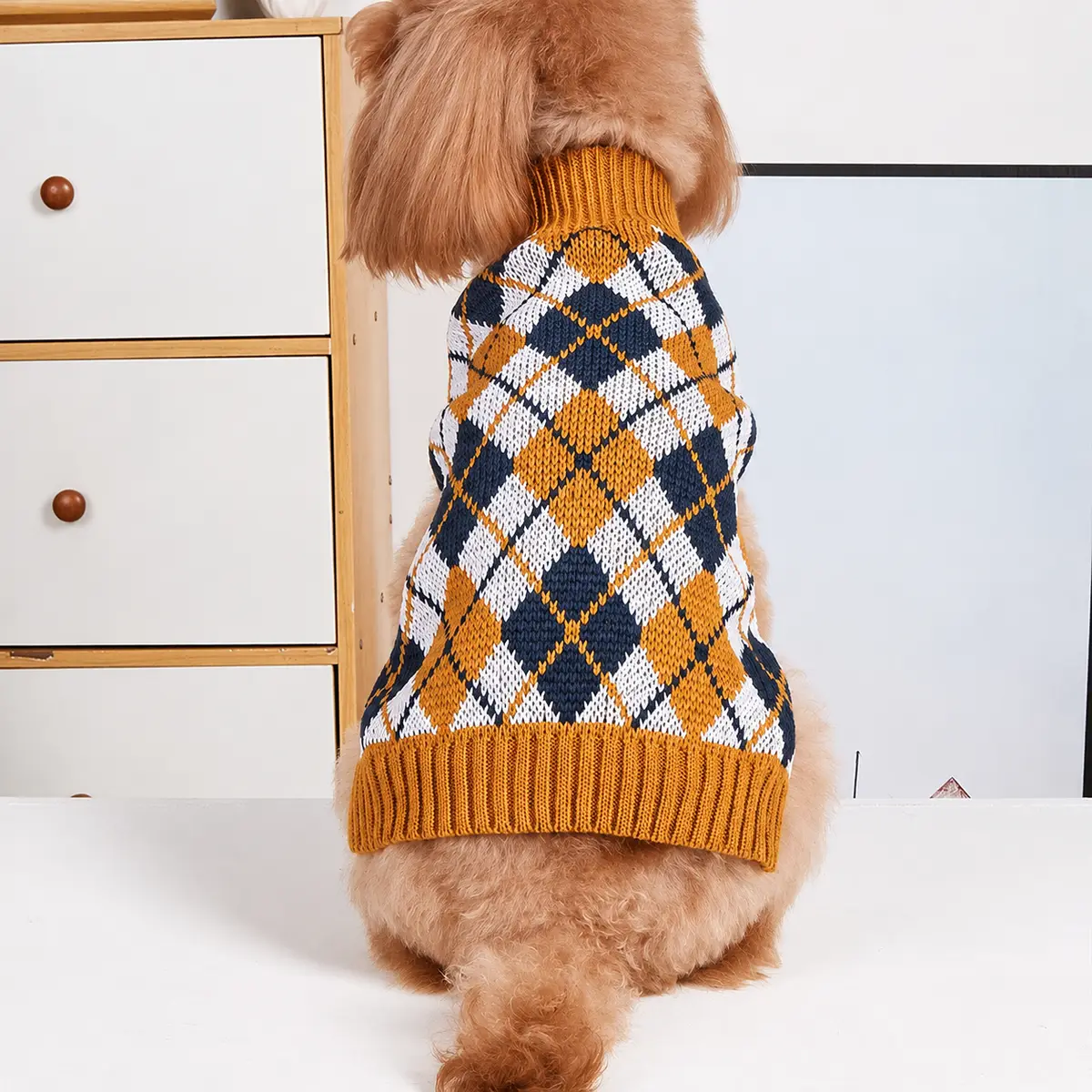
A knit jumper in red or with a heart pattern is the most practical Valentine's choice, because it doubles as a warm layer in February. A red heart knit dog jumper is the typical example: it covers the back and chest, leaves the legs free and has nothing to chew off. See our wider range of dog sweaters if you want a plainer style that can be worn long after the holiday.
Accessories are the lightest option. A headband or hairband-style prop, such as a Valentine's Day hairband for dogs, gives a festive look without covering the body, though it sits near the eyes and ears and needs a close eye. A bandana from our dog bandanas collection is similar. Full costumes add the most heat and the most things that can snag, so they suit short photo sessions only.
Best type for each situation
For a short-coated or small dog that feels the cold, choose the jumper. It adds warmth and gives you the holiday look in one piece. For a thick-coated dog, an accessory is the better pick: the AKC notes that costumes can trap heat, so heavy or restrictive outfits are riskier in warm conditions or during long periods outdoors, and a double-coated dog in a heated living room can overheat quickly.
For a dog that has never worn clothes, start with the lightest item and introduce it before the day itself. The AKC advises introducing new outfits before the big day, with patience and high-value rewards. For a nervous dog, the best option may be a festive collar or nothing at all: not every dog enjoys dressing up, and a stressed dog is not a good photo subject.
What to avoid
Avoid outfits with detachable decorations. The AKC warns that buttons, gemstones and other detachable pieces can be swallowed and lodge in the airway or digestive tract. Heart-shaped sequins, bows, ribbon ties and dangling pom-poms all fall into that group, so check each one by pulling on it, and cut away anything that comes loose.
Avoid anything that covers the face or mouth, anything that rides up under the legs, and anything the dog can step on and trip over. Avoid leaving a dressed-up dog alone: the AKC says costumes can shift, snag or become chew toys, and that you should never leave your dog unattended while they are dressed up. Take the outfit off as soon as the photos are done.
How to measure and introduce an outfit
Measure with the dog standing and a soft tape snug but not tight. For back length, run the tape along the spine from the base of the neck, where the collar sits, to the base of the tail. For chest girth, wrap around the widest part of the ribcage just behind the front legs, which the AKC calls often the most important clothing measurement. For neck girth, measure around the base of the neck. Leave room for two fingers between the tape and your dog.
Introduce the outfit slowly. Let your dog sniff it, hold it up without putting it on, reward calm behavior, then try it on for a minute or two before building up. If your dog freezes, scratches at it, or walks oddly, remove it and try again another day. A short, positive session is worth more than a long, tense one.
Care and when to call your vet
Wash knitwear following the label, let it dry fully and check seams and any trim before each wear. Retire anything with a hole, a loose thread or a decoration that is coming away. Our Valentine's outfits and dog sweaters are easy to browse when it is time to replace one.
Call your vet if your dog chews off and swallows any part of an outfit, or if you see vomiting, retching, drooling, a swollen belly or lethargy afterwards. Redness or hair loss where fabric rubs is also worth a visit. This page is general information, not veterinary advice, and it cannot replace an examination by the vet who knows your pet.
Valentine outfit formats and coverage
| Format | Coverage | Fitting detail to check |
|---|---|---|
| Knit sweater | Back and chest | Neck,leg openings and hem |
| Bandana | A neck accessory | Tying or fastening position |
| Headband-style prop | Near the head and ears | Position relative to eyes and ears |
| Full costume | Additional body panels and decorations | Movement and pieces that might snag |
Common questions
What is the best Valentine's outfit for a dog?
A simple knit jumper or a light accessory is usually best because it fits snugly without restricting movement and has nothing detachable to swallow. Check fit and decorations before wearing.
Is it safe to dress my dog up for Valentine's Day?
It can be, if the outfit does not restrict breathing, movement or vision, has no loose parts, and your dog is calm in it. Never leave a dressed-up dog unattended.
How do I measure my dog for an outfit?
Measure back length, chest girth at the widest part of the ribcage behind the front legs, and neck girth. Leave room for two fingers, and size up if you fall between sizes.
What if my dog hates wearing clothes?
Do not force it. Try a very short introduction with treats, or choose a bandana or festive collar instead. If your dog looks stressed, take the outfit off right away.
Sources we checked
This guide is general information, not veterinary advice. If your pet is unwell or injured, contact your veterinarian.