






Buying guides
Best Dog Pajamas: How to Choose a Safe, Comfortable Pair
The best dog pajamas fit snugly without restricting movement, use soft, breathable fabric and suit a dog that tends to feel cold, such as a small, short-coated, lean or senior dog. They are for supervised lounging, not unattended sleep, because loose clothing can snag. Measure back length, chest and neck first, then browse our dog pajamas.
By Matt GarnettUpdated November 14, 20264 min read2 sources
Which dogs actually benefit from pajamas
Pajamas are mostly a style choice, but some dogs get a real benefit. The American Kennel Club says small dogs, especially toy breeds, dogs without thick fur, lean short-haired breeds such as Whippets and Greyhounds, hairless breeds, dogs with shaved fur, young puppies and senior dogs are the ones that tend to benefit from clothing.
Large, healthy dogs with thick coats generally do not need clothes and could even overheat in them. If your dog is a heavy shedder or has itchy skin, ask your vet before dressing them, because full-body garments are sometimes used for shedding control or after surgery, and that is a decision for the vet who knows your dog.
Fit: measure first and choose snug, not tight
The AKC advises measuring back length, chest girth and neck size with a soft tape, then checking the maker's chart, because sizes vary by brand. Clothing should fit well without being too tight: tight garments restrict movement and can cause injuries, while baggy ones cause tripping or snagging.
Test the fit with the dog standing, sitting and walking. Your dog should be able to walk, run and play normally, lie down comfortably and still be able to toilet. Pajamas that ride up, bunch under the armpits or pull across the chest are the wrong size, however cute the print looks.
Fabric and warmth: breathable beats heavy
Because dogs cool themselves mainly by panting, heavy garments can make a warm dog uncomfortable. Choose lightweight, soft, breathable fabric for indoor use. A cotton print pajama set is a lighter type than a plush pajama, which suits cooler rooms and dogs that feel the cold.
The AKC notes that sweaters are usually less warm than jackets, which makes lighter clothing more comfortable indoors, and that thicker garments are for very cold weather. Watch your dog for panting or drooling once it warms up, and take the pajamas off if either appears. Check the label for washing instructions and wash new garments before first wear.
Styles compared: one-piece, two-piece and dress-style
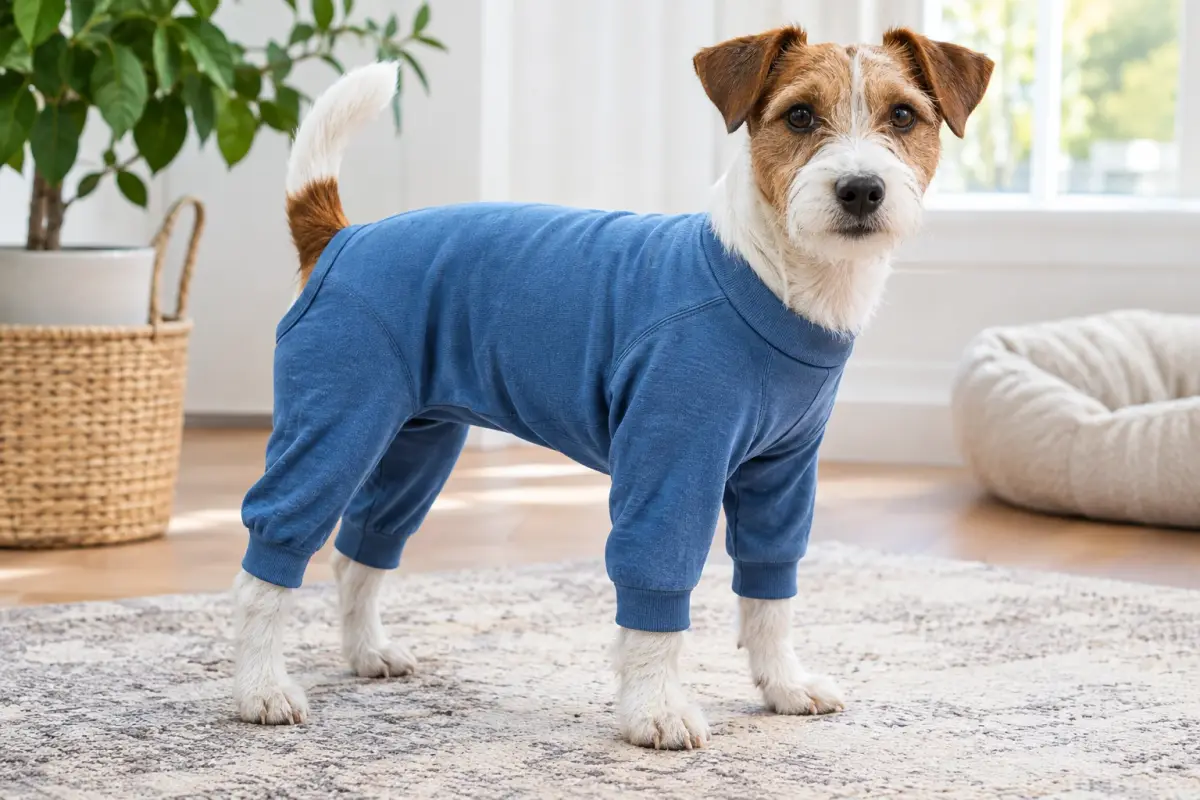
One-piece pajamas with sleeves cover more of the body and suit dogs that need extra warmth or a full-body layer. Short or sleeveless styles cover the chest and back only, leaving the legs free, which makes them easier to put on and suits dogs that dislike sleeves. A gingham pajama is a simple example of an easy, open design.
Look for stretch at the neck so the garment goes over the head without a struggle, and for a belly opening that keeps toileting clean. Avoid long ties, dangling trim and small decorations, because loose parts can snag or become a choking hazard. Our guide to matching pajamas for dog and owner cover the matching sets.
Sizes and breeds: small dogs and large dogs
Small dogs are the largest group of pajama wearers, and our pajamas for small dogs range suits dogs like Dachshunds and French Bulldogs. For stocky or deep-chested dogs such as Pit Bulls and Bulldogs, chest girth is the measurement that decides the size, not weight, so a bigger body on a short frame needs a wider cut.
Our pajamas for large dogs collection suits bigger frames, where cut and stretch matter most. If your dog's measurements fall between two sizes, choose the larger size when the garment has no stretch, and the smaller when it has plenty of stretch, then check that the garment does not pull across the chest or restrict the legs.
Safe use: supervision, introduction and when to skip them
The AKC says dogs wearing clothes should always be supervised. Do not leave pajamas on a crated or unattended dog, because they can snag or become a choking hazard. Take them off at bedtime if your dog sleeps unobserved, and use them for evenings on the sofa when you are with your dog.
Introduce pajamas gradually. Let your dog sniff the garment, bring it to the body, put it on gently with treats and praise, then build up wearing time indoors. If your dog seems stressed or frustrated, remove it right away and try again later. See all of our dog pajamas when you are ready to compare.
Pajama coverage and garment openings
| Style | Coverage | Measure or inspect |
|---|---|---|
| Sleeved one-piece | Body and leg coverage | Body length,chest and leg openings |
| Short or sleeveless | Chest and back without full leg coverage | Neck,chest and body length |
| Open shirt style | Shirt-shaped body with a front opening | Closure position and belly clearance |
Common questions
Do dogs need pajamas?
Most do not. Small, short-coated, hairless, lean, shaved, very young and senior dogs may benefit from the extra layer, but healthy thick-coated dogs can overheat. Ask your vet if you are unsure.
Is it safe for a dog to sleep in pajamas?
The AKC advises supervising dogs in clothes and not leaving them on when crated or unattended, because they can snag or become a choking hazard. Remove pajamas if your dog sleeps unobserved.
How do I measure my dog for pajamas?
Use a soft tape to measure back length, chest girth and neck size, then compare them with the maker's size chart. Sizes vary by brand, so do not rely on weight alone.
What fabric is best for dog pajamas?
A soft, lightweight, breathable fabric suits indoor wear, with a thicker or plush fabric only for cool rooms or dogs that feel the cold. Remove the pajamas if your dog starts panting or drooling.
Sources we checked
This guide is general information, not veterinary advice. If your pet is unwell or injured, contact your veterinarian.


