Buying guides
Best Dog Beds for Medium Dogs: How to Choose Size and Style
For a medium dog of roughly 25 to 50 pounds, the best bed is usually 30 to 36 inches long with a supportive foam base 3 to 4 inches deep and a removable, washable cover. Choose the shape by how your dog sleeps: bolster or donut beds for curlers, flat mattresses for sprawlers, cave beds for burrowers. Measure your dog lying down rather than trusting a size label.
By Matt GarnettUpdated November 13, 20264 min read2 sources
What matters most: size, support and a washable cover
Medium dogs sit in the awkward middle of bed sizing, which is why it helps to start with dog beds for medium dogs: a small bed is cramped and a large one can be bulky in a small room. Measure your dog in its usual sleeping position, from nose to base of tail, and add 6 to 10 inches. A Beagle, Border Collie or Cocker Spaniel often lands in the 30 to 36 inch range, but measuring is the only reliable way.
Support is next. The AKC notes orthopedic beds with egg-crate or memory foam can help dogs with joint pain and offer preventive support for younger dogs. A fist pressed into the middle should not reach the floor. Then the cover: the AKC suggests a removable cover washed weekly to reduce hair, dander and germs, and washable dog beds make that routine easy.
Fill types compared
Foam beds, whether solid support foam or memory foam, hold their shape and spread pressure evenly; they suit most medium dogs and especially active or older ones. Polyester fiber fill is soft and cheap but flattens and clumps within months under a 40-pound dog. Shredded foam fill is a middle ground that can be fluffed but also compresses over time.
Some beds combine a foam base with fiber-filled bolsters, which gives support underneath and softness at the edges. Waterproof liners between the cover and foam protect against accidents and drool, which is useful for puppies and seniors, as the AKC points out.
Best style for each medium dog
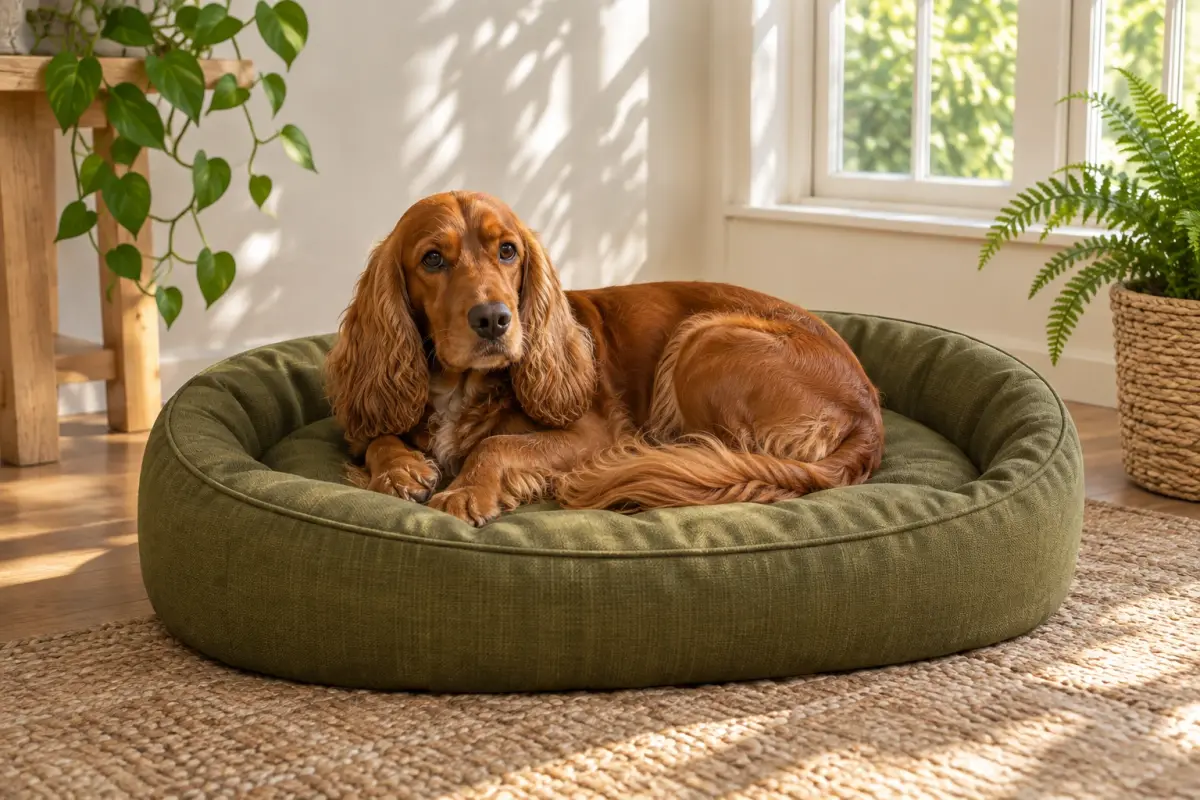
For dogs that curl up, a round donut or bolster bed gives something to lean against and feels secure. For dogs that sprawl on their side, a rectangular flat mattress, for example a small and medium-sized dog bed mat, or a bed with a low bolster on one side gives room to stretch. For dogs that burrow under blankets, a cave or hooded bed suits them, and the AKC notes covered beds can help anxious dogs.
For active breeds that run warm, an elevated cot keeps air flowing underneath. For senior medium dogs or those with stiff hips, a memory foam bed with a low entry, such as this cooling gel memory foam bed for medium dogs, is the first choice. For crates, measure the crate floor and pick a flat pad that fits it exactly.
What to avoid
Avoid beds sized only by the dog weight on a label, since breeds of the same weight vary widely in length. Avoid fiber-only fill for dogs that already show stiffness. Avoid beds without removable covers if your dog sheds or swims. Avoid beds with zips, tassels or stuffing a chewer can get to, and supervise a new bed until you know your dog leaves it alone.
If your dog starts avoiding its bed, gets up slowly, limps after sleeping or circles for a long time before lying down, the bed may be unsupportive, or your dog may have joint pain. A vet can check, and the answer may be a better bed alongside treatment.
How to measure for a bed
Measure your dog lying down, nose to the base of the tail, and add 6 to 10 inches for length. For round beds, the diameter should be at least that figure for a curler. Also note the width when your dog lies on its side with legs out, which matters for sprawlers.
If your dog falls between sizes, go up, especially for sprawlers and dogs that like to rest their heads on bolsters. For a puppy of a medium breed, buy for adult size if the bed is foam, or buy an inexpensive bed now and a better one when growth slows.
Care and when to replace it
Vacuum the bed weekly and wash the cover as the label allows. Spot-clean foam and let it air dry fully; most foam should not go in a dryer. A waterproof liner extends the life of the foam considerably.
A foam bed for a medium dog typically lasts two to five years; a fiber bed far less. Replace it when the center stays flattened, the foam crumbles, the cover cannot be cleaned or odor returns right after washing. Keeping a spare cover makes weekly washing easy, and our guide on how to wash a dog bed covers the rest.
Bed filling arrangements and inspection points
| Filling arrangement | Construction described | What to inspect |
|---|---|---|
| Solid or memory foam | A continuous foam body | Exact foam declaration and whether it stays flattened |
| Polyester fiber fill | Loose soft filling | Clumping and flattening |
| Shredded foam | Separate pieces of foam | Compression and ability to redistribute filling |
| Foam base with fiber bolsters | Different fillings in the center and edges | The usable center and each removable cover |
| Liner beneath the cover | A separate layer around the filling | Coverage and the maker’s cleaning directions |
Common questions
What size bed does a medium dog need?
Usually 30 to 36 inches long for dogs of about 25 to 50 pounds, but measure your dog lying down, nose to tail base, and add 6 to 10 inches.
Is memory foam good for medium dogs?
Yes. Memory foam spreads pressure and holds its shape, which suits active and older dogs. It costs more than fiber fill but lasts much longer.
What is the best bed shape for a dog that curls up?
A round donut or bolster bed, which gives a rim to lean on and feels secure. Dogs that sprawl prefer rectangular mattresses. Measure your dog curled up to choose the inside diameter.
How often should I replace my dog's bed?
Every two to five years for a good foam bed, sooner for fiber-filled beds. Replace it when it stays flat, smells after washing or your dog stops using it.
Sources we checked
This guide is general information, not veterinary advice. If your pet is unwell or injured, contact your veterinarian.