






Buying guides
Best Chinchilla Cage: Size, Levels and Safety
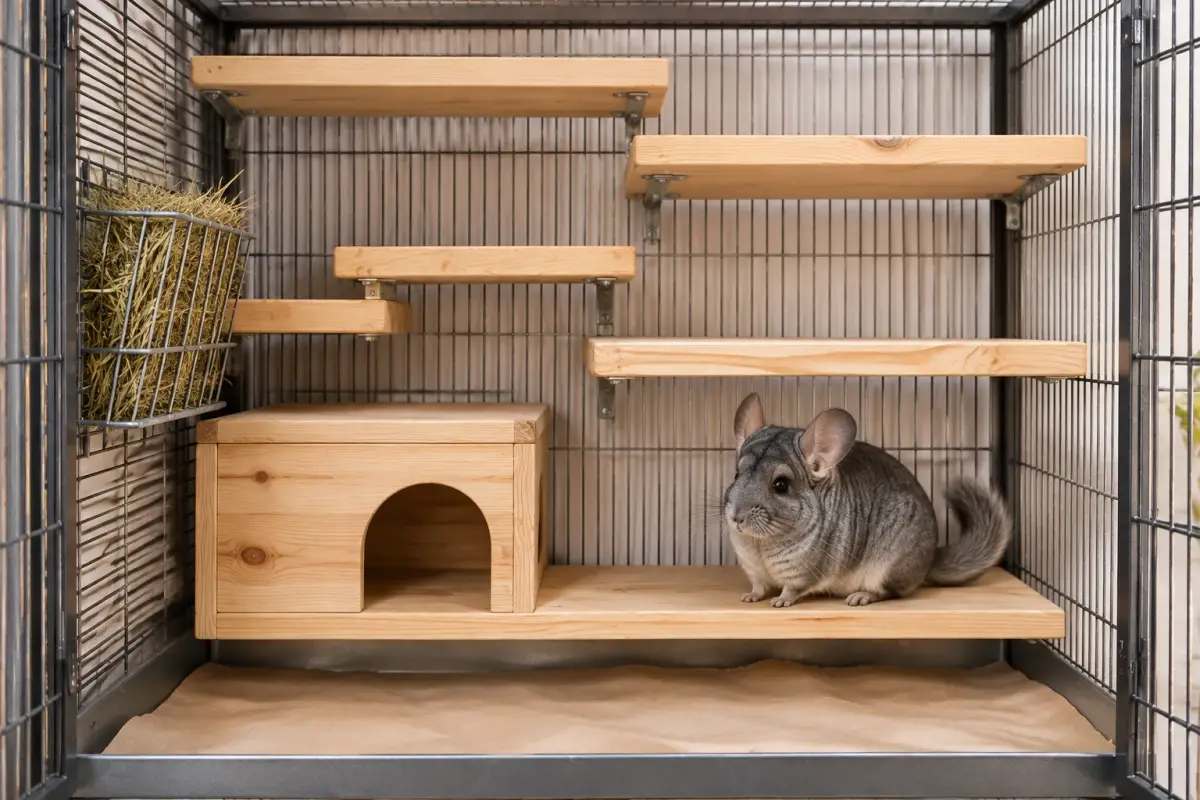
The best chinchilla cage is tall and multilevel, made of metal with no exposed plastic to chew, with solid shelves and ramps rather than wire platforms, and narrow bar spacing. VCA gives minimums of about 3 by 2 by 3 feet for one chinchilla and taller for a pair. Placement in a cool, dry room matters as much as the cage itself.
By Matt GarnettUpdated November 14, 20263 min read2 sources
How much space a chinchilla needs
Chinchillas are very active, agile and acrobatic, and VCA says their cage should allow ample room to move. VCA's housing guidance gives minimum dimensions of roughly 3 by 2 by 3 feet for a single chinchilla and 3 by 2 by 5 feet for a pair; some VCA guidance suggests more. Height matters, because chinchillas jump and climb rather than run along the floor.
Multilevel cages work well. VCA notes cages designed for ferrets can suit chinchillas, provided there are no areas where a chinchilla can catch its limbs or feet. Bigger is better, and a chinchilla also benefits from supervised time out of the cage in a safe room or a small animal playpen.
What matters most in the cage
Materials come first. Chinchillas chew everything, and plastic shelves, trays and ramps can be chewed and swallowed. Choose an all-metal cage with a metal pan, and furnish it with untreated wood or other chew-safe shelves. Bar spacing should be narrow enough that a chinchilla cannot squeeze through or trap its head.
Floors and shelves come next. Wire platforms and wire floors can catch feet and cause sore feet, so cover them with solid wood or use solid shelves. Shelves should be placed so a fall from the top is broken by intermediate levels.
Temperature and placement
Chinchillas are sensitive to heat. VCA gives an optimal temperature of roughly 50 to 68 degrees Fahrenheit, never as high as 80, with low humidity, and warns that chinchillas can quickly die from overheating. Place the cage in a cool, dry, well-ventilated room away from windows, heaters and direct sun.
In summer, an air-conditioned room is often essential. Avoid basements that are damp. If your chinchilla lies stretched out, breathes fast, drools or is weak on a hot day, cool the room and call a vet experienced with exotic pets immediately.
Furnishing the cage
Provide a hide box, solid shelves and ledges at several heights, a large solid-surface wheel if you use one, chew toys of untreated wood or pumice, a hay rack and a water bottle. A dust bath should be offered a few times a week in a separate container, then removed.
Bedding should be paper-based or another low-dust material; VCA's rodent guidance cautions against aromatic cedar shavings. Avoid fabric hammocks for chewers, which can be eaten.
Cleaning and lifespan
Spot-clean daily, remove uneaten fresh food, and change bedding fully every week. Scrub shelves and the pan regularly and replace chewed wooden parts. A well-built metal cage lasts many years, which matters because chinchillas can live well over a decade.
Watch for reduced eating, fewer or smaller droppings, drooling, overgrown teeth or fur chewing, and see an exotics vet promptly, because chinchillas hide illness.
Plan for the long term when you buy. A cage that is easy to take apart, with a pull-out pan and doors wide enough to reach every shelf, makes the weekly clean quicker and means you will keep doing it properly for the many years a chinchilla lives. Compare cages sold for chinchillas, such as the Small Animal Cage Chinchilla Cage or a platform-and-ramp small animal cage, against these points, and see our other chinchilla cages.
Common questions
What size cage does a chinchilla need?
VCA gives minimums of about 3 by 2 by 3 feet for one chinchilla and 3 by 2 by 5 feet for a pair, with multiple levels. Taller and larger is better for these active jumpers.
Can chinchillas live in ferret cages?
Multilevel ferret-style cages can work well, as VCA notes, provided there are no gaps that could trap limbs or feet and plastic parts are replaced with chew-safe materials.
Are wire floors bad for chinchillas?
Bare wire floors and platforms can catch feet and cause sore feet. Use solid shelves and cover wire floors with solid wood or another chew-safe surface.
Where should I put a chinchilla cage?
In a cool, dry, well-ventilated room, ideally 50 to 68 degrees Fahrenheit, away from windows, heaters and direct sun. Chinchillas overheat easily, so an air-conditioned room is often needed in summer.
Sources we checked
This guide is general information, not veterinary advice. If your pet is unwell or injured, contact your veterinarian.


