






Breeds
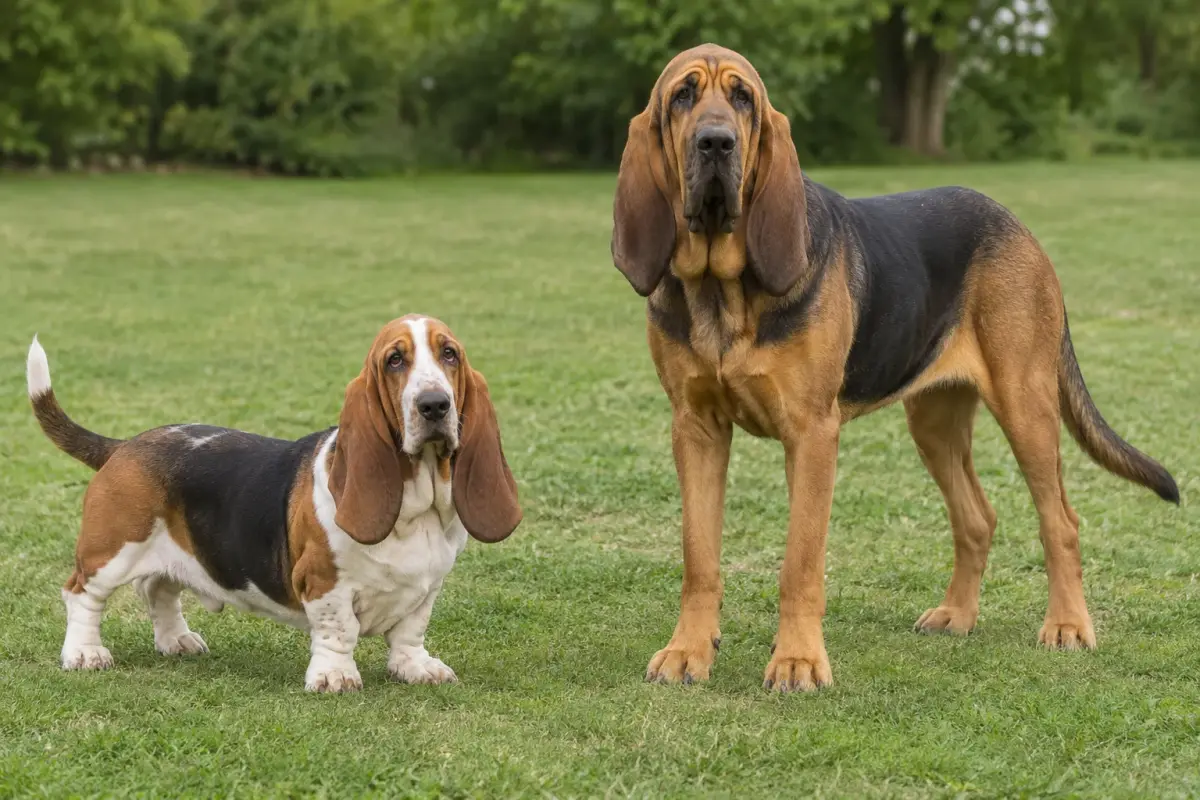
Basset Hound vs Bloodhound
The Basset Hound is much shorter and generally lighter, while the Bloodhound is a large tracking dog with considerable strength and endurance. Both are scent hounds whose noses can take priority over your plans. Choose by the size you can handle, your approach to patient training, and your ability to provide safe activity and routine ear and skin care.
By Matt GarnettUpdated November 14, 20263 min read4 sources
The main differences in size and commitment
VCA gives Basset Hounds a 40–60-pound weight guide and Bloodhounds an 80–110-pound guide. Their height difference is striking even when a Basset is a substantial dog to lift. Consider adult size when arranging transportation and deciding who can manage routine handling comfortably.
VCA’s broad lifespan guides are 12–15 years for Bassets and 10–12 for Bloodhounds. Both need daily activity, patient training, and grooming beyond a glance at a short coat. The Bloodhound brings more physical size; the Basset brings a lower, heavy-bodied outline. Best fit depends on the individual’s behavior and the care you can sustain rather than which face looks more appealing.
Understand what following a scent means
AKC describes the Basset as a low-built hound with a sometimes stubborn character and the Bloodhound as determined when tracking. A relaxed dog indoors may become much more focused outside. Ask how the individual responds to smells and distractions during a normal walk.
VCA advises controlled outdoor activity for Bloodhounds because tracking can take priority over commands. Discuss safe leash handling and secure surroundings for the dog you choose. Do not make freedom outdoors depend on an assumption that affection will overcome scent interest. A realistic conversation about management belongs before adoption, especially with a dog whose strength may exceed your expectations.
A long-line leash lets a scent hound follow its nose at a distance while you keep control in open spaces.
Choose patience as part of the training plan
Ask the current caregiver which skills the dog knows and what happens when it is interested in something else. Look for specific descriptions of walking, settling, handling, and response to people. A broad claim that a breed is gentle does not explain how an individual behaves in your household.
Use humane, reward-based instruction and expect to practice in manageable settings. Consider whether you enjoy working with a dog that may have priorities of its own. If you need support, arrange it early rather than interpreting every difficulty as defiance. The useful comparison is how well your expectations fit the animal’s actual needs.
Compare daily activity and hands-on care
A short coat does not remove the need for grooming and observation. VCA emphasizes ears and skin folds in Bloodhound care. Ask how the dog accepts routine checks and which care tasks are already familiar. Discuss odor, redness, discharge, pain, or repeated scratching with your veterinarian rather than assuming these are normal hound features.
Consider activity and mobility as well as grooming. Ask what the dog comfortably does now and get veterinary guidance about appropriate exercise for its age and condition. Think about your home’s entrances, resting places, and transportation. Choose a routine you can maintain through ordinary busy days as well as when the dog needs extra help.
Decide with the individual’s history and health
A Basset may appeal if you prefer a shorter hound but can still manage a solid, substantial body. A Bloodhound may appeal if you enjoy a larger tracking companion and can support safe activity and handling. Neither breed description guarantees an easy relationship with children or existing pets.
Review available medical and behavior records with your veterinarian and the caregiver. Broad lifespan guides cannot predict which animal will be healthier. Ask about unexplained changes in appetite, movement, comfort, or behavior. The right choice is a hound whose needs fit your household and the long-term care you can provide.
This page is general information, not veterinary advice, and it cannot replace an examination by the vet who knows your pet.
Common questions
Is a Basset Hound a small dog?
It is short, but not necessarily light. VCA lists Bassets around 40–60 pounds. Consider lifting, transportation, and handling needs rather than assuming short legs make an individual easy to manage.
Does a calm hound need little activity?
A calm appearance does not remove daily activity and engagement needs. Ask about the individual’s current routine and discuss suitable movement with your veterinarian, especially when age or health affects comfort.
Why does scent matter when choosing between them?
Both are scent hounds, and interest in a trail can compete with your cues. Ask about the individual dog’s response to distractions and plan safe walking and secure management before choosing.
Sources we checked
This guide is general information, not veterinary advice. If your pet is unwell or injured, contact your veterinarian.