






Breeds
Beagle vs Basset Hound: Two Scent Hounds Compared
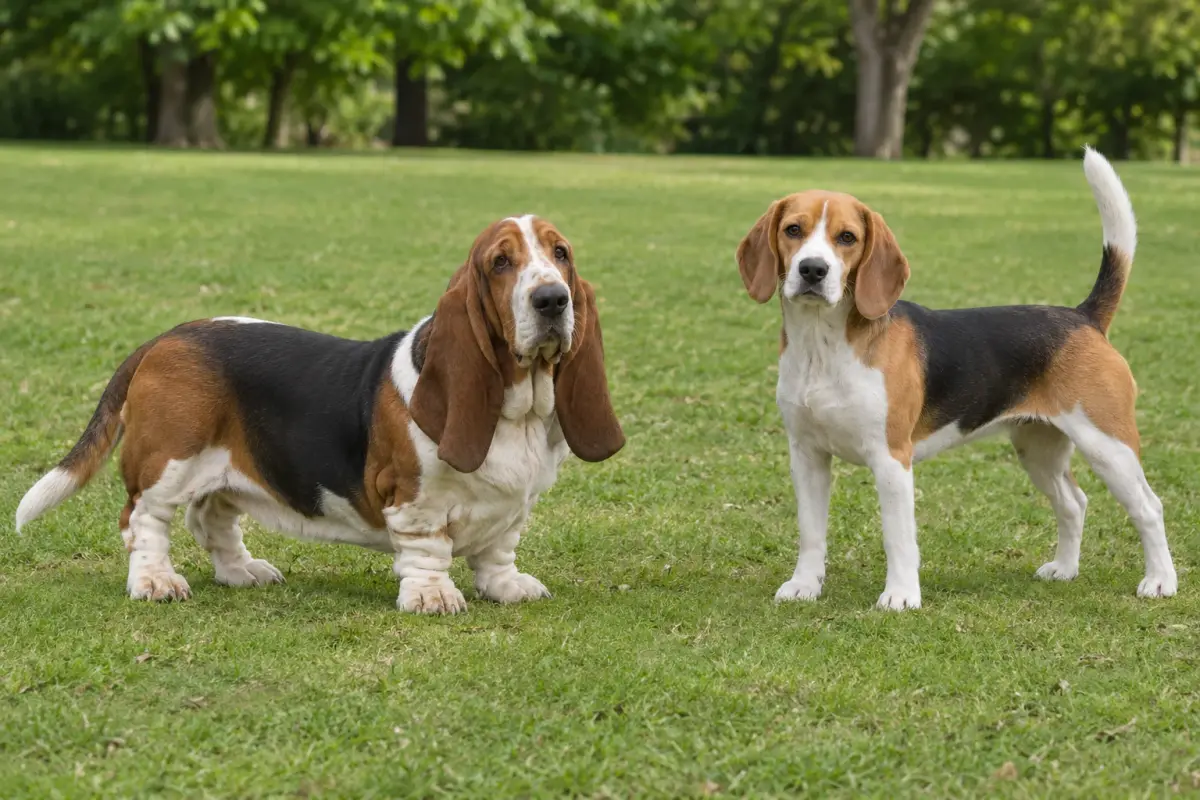
Beagles and Basset Hounds are both friendly, food-loving scent hounds that follow their noses and ignore you when called. The Beagle is the lighter, busier dog, under 20 to 30 pounds per the AKC, with much more energy; the Basset is a low, heavy hound of 40 to 65 pounds that VCA calls a calm, reliable housedog. Both are vocal, stubborn and prone to weight gain. Choose a Beagle for activity, a Basset for a laid-back home.
By Matt GarnettUpdated November 14, 20264 min read4 sources
Side by side
Size: the AKC lists Beagles in two height classes, 13 inches and under at under 20 pounds and 13 to 15 inches at 20 to 30 pounds, and Basset Hounds at up to 15 inches and 40 to 65 pounds. Lifespan: AKC gives Beagles 10 to 15 years and Bassets 12 to 13. Popularity: the Beagle is No. 7 on the AKC list and the Basset No. 34. Coat: both short and easy-care.
Energy: VCA rates Beagles high and calls Bassets low-energy, rating them 1 out of 5 as jogging partners. Noise: VCA says Beagles may become vocal and Bassets often bark and bay loudly. Recall: poor for both. Training: both stubborn; food rewards work best. Children: both friendly, though VCA notes a Basset's low energy may frustrate kids. Other dogs: both usually sociable. Best for: Beagles for active families; Bassets for calm homes.
Origins
The AKC describes the Beagle as an excellent hunting dog and loyal companion, happy-go-lucky and funny, bred to hunt in packs, which is why it enjoys company and is generally easygoing. VCA says Beagles were developed for tracking small game and are highly driven by scent.
The Basset Hound's name comes from the French bas, meaning low, and VCA explains that short-legged scent hounds let hunters without horses follow rabbits on foot. Crosses with Bloodhounds in the late 1800s increased size, and the AKC recognized the breed in 1911. The AKC calls it low-slung, low-key, sometimes stubborn but always charming.
Temperament
VCA describes Beagles as friendly and social with people and other dogs, curious and scent-driven, and prone to becoming vocal, destructive or escape-minded when bored. They have limited tolerance for being left alone. Bassets are easygoing and amiable, good with other dogs and pets, friendly to indifferent with strangers, and stubborn and methodical, according to VCA.
Both breeds follow their noses first. VCA says Bassets tend to wander and do not come when called, and that Beagles are easily distracted outdoors. Keep both on leash or in a securely fenced yard, and expect them to investigate trash cans and countertops. Neither is a watchdog in the guarding sense, though both will announce visitors loudly.
Exercise and training
Beagles need daily exercise that lets them explore, says VCA, with walks, play and scent games. Bassets prefer to walk, sniff and explore at their own pace, and VCA notes many of their needs can be met with backyard games, though they still enjoy a good walk. Bassets do best in moderate climates.
Train both with short sessions and food rewards, which VCA recommends for each breed. Teach a reliable recall in a fenced area, but never trust it near traffic. Scent work and tracking classes are a great outlet for either hound and turn their nose into a hobby rather than a nuisance.
Grooming, weight and health
Both coats need a weekly brushing. VCA adds that a Basset's mouth and wrinkles should be checked, cleaned and dried regularly, and long ears on both breeds benefit from routine checks. Bassets have a tendency to become obese, VCA warns, and Beagles gain weight without enough activity, so measure meals and keep treats small.
VCA lists congenital heart defects, cherry eye, Musladin-Lueke syndrome, epilepsy, hypothyroidism, allergic skin disease and intervertebral disc disease among Beagle concerns. For Basset puppies, VCA suggests a large-breed growth food, which it says may reduce the incidence or severity of hip dysplasia. Ask your vet about a healthy weight and safe exercise for either breed.
Which to choose
Choose a Beagle if you want a smaller, energetic, playful hound for an active family and can provide daily walks, play and a well-fenced yard. Choose a Basset Hound if you want a calm, easygoing companion that is happy with gentle outings and lots of lounging, and you can manage a heavy dog's weight and ears.
Both suit people who can laugh off stubbornness and live with some baying. Neither is ideal for close neighbors who dislike noise. If you are adopting, ask how the dog behaves when left alone, since boredom barking is common in both breeds.
This page is general information, not veterinary advice, and it cannot replace an examination by the vet who knows your pet.
Common questions
Which is bigger, a Beagle or a Basset Hound?
The Basset Hound is much heavier, at 40 to 65 pounds per the AKC, though both are short. Beagles weigh under 20 to 30 pounds and stand up to 15 inches.
Which is calmer, a Beagle or a Basset Hound?
The Basset. VCA calls it a calm and reliable housedog with low energy, while Beagles are high-energy and can become vocal or destructive when bored.
Are Beagles or Basset Hounds louder?
Both are vocal. VCA says Bassets often bark and bay loudly and that Beagles may become vocal, especially when bored or following a scent. Neither suits a home where noise is a problem.
Are Beagles and Basset Hounds good with kids?
Generally, yes. VCA describes both as friendly and good with children, though a Basset's low energy may frustrate kids who want an active playmate. Supervise play with small children.
Sources we checked
This guide is general information, not veterinary advice. If your pet is unwell or injured, contact your veterinarian.