






Care & how-to
Are Poinsettias Poisonous to Dogs and Cats?
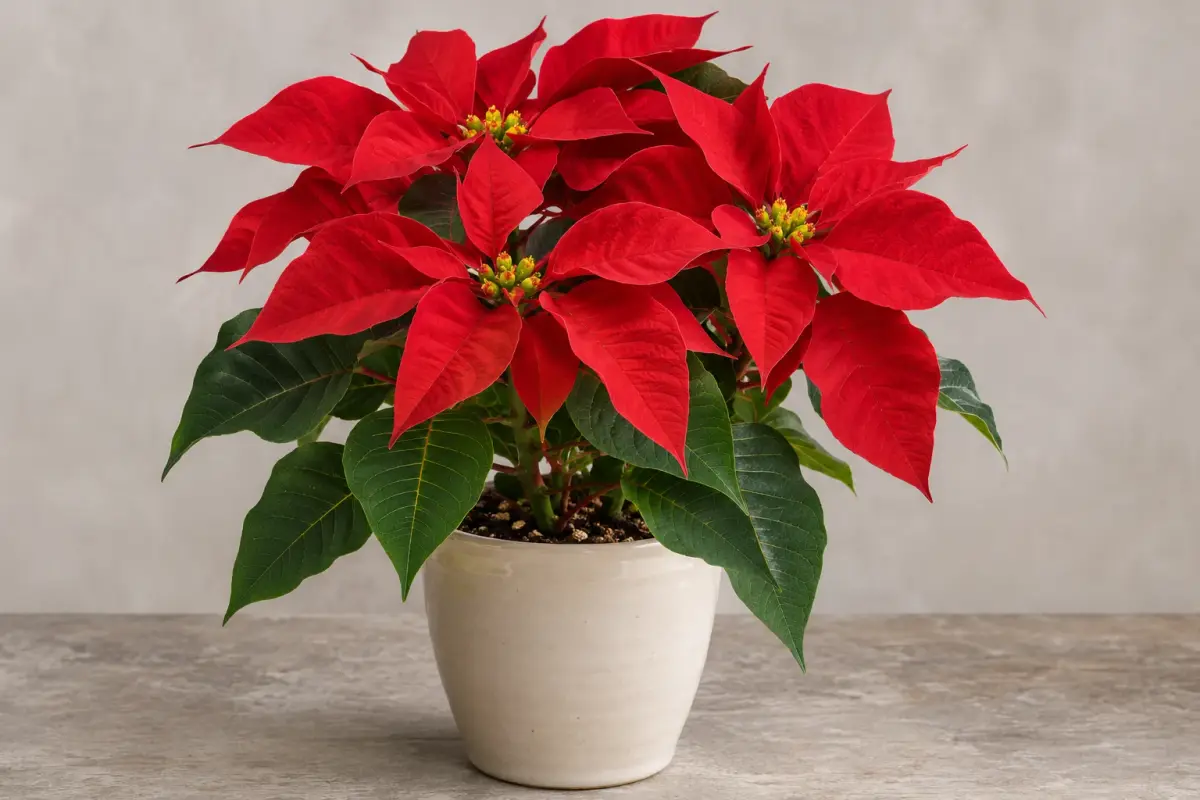
Poinsettias are only mildly toxic to dogs and cats. The milky sap can cause drooling, vomiting or diarrhea, but serious poisoning is not expected. Other holiday plants are riskier: lilies can be fatal to cats, and mistletoe, holly and amaryllis bulbs can cause more severe illness. If your pet eats any holiday plant and seems unwell, call your vet.
By Matt GarnettUpdated November 14, 20264 min read3 sources
Poinsettias: why the reputation is worse than the reality
Poinsettias have a long-standing reputation as deadly, but Pet Poison Helpline rates them as low toxicity and says serious harm is not expected. The plant's milky white sap irritates the mouth and stomach, so a pet that chews the leaves may drool, lick its lips, vomit or have loose stools. Sap on the skin can cause mild redness or itching.
That does not mean you should let your dog or cat graze on one. A large amount of leaves can still make a pet miserable for a day, and the plant's pot, foil wrap and soil add their own hazards. Keep poinsettias on a high table or in a room your pets do not use, and sweep up dropped leaves. If your pet vomits repeatedly, will not eat, or seems lethargic, call your vet.
Holiday plants that are more dangerous

Lilies are the one to worry about most in a home with cats. Easter, stargazer, tiger and other true lilies and daylilies, often added to winter bouquets, can cause kidney failure in cats from a nibble of leaf, a lick of pollen or a drink of vase water. Treat any lily exposure in a cat as an emergency and call a vet immediately.
Mistletoe usually causes vomiting and diarrhea in small amounts, but Pet Poison Helpline warns that large amounts can affect the heart and, rarely, the nervous system. Holly berries and leaves cause vomiting, diarrhea, drooling and lethargy. Amaryllis leaves and flowers upset the stomach, and the bulb is more toxic, with large amounts linked to tremors, weakness and blood pressure changes. Hang mistletoe well out of reach, and keep bulbs and paperwhite kits sealed.
Christmas tree safety for dogs and cats
Pine, fir and spruce needles are not highly toxic, but they can irritate the mouth and stomach, and a pet that eats a lot of them can get a blockage. Tree water often collects sap, bacteria and any preservative added to it, so cover the stand with a skirt or tree tray your pet cannot get into. Artificial trees remove the water problem, but chewed plastic needles can still cause stomach upset.
Anchor the tree to a wall or ceiling hook so a climbing cat or a bumping dog cannot topple it. Keep glass ornaments, ornament hooks and salt-dough decorations on the upper branches, and skip tinsel entirely in a home with cats: the ASPCA warns that swallowed tinsel can cause vomiting, an intestinal blockage and sometimes surgery. Our guide to cat-proofing a Christmas tree goes into more detail.
Lights, cords, candles and gifts
Puppies and kittens chew cords, and a bite into a live wire can burn the mouth or cause an electric shock. Run light strings high, use cord covers on anything at floor level, and unplug the tree when no one is home. Batteries for gifts and toys are another hazard: a punctured battery can burn the mouth and throat, so keep spares in a drawer.
Candles can be knocked over by a wagging tail or a curious cat, so never leave one burning in an empty room. Wrapped gifts under the tree may hold chocolate, gum or treats that a dog can smell through the paper. Keep edible gifts off the floor until they are opened, and ask guests to put bags and coats in a closed room.
Holiday food and party hazards
The ASPCA advises keeping your pet's diet as normal as possible over the holidays. Fatty trimmings, gravy and rich leftovers can trigger vomiting, diarrhea or pancreatitis, and cooked bones can splinter. Chocolate, raisins and grapes, onions, garlic, macadamia nuts and anything made with xylitol are toxic, and alcohol is dangerous even in small amounts. Secure the trash can lid, especially after a big meal.
Busy, noisy gatherings stress many pets. Give yours a quiet room with water, a bed and a familiar toy, and make sure everyone knows not to let them out of the front door. Snow globes are a lesser-known risk: the liquid can contain ethylene glycol, the toxic ingredient in antifreeze, so clean up a broken one thoroughly and call your vet if your pet licked any.
When to call a vet or poison control
Mild drooling or a single bout of vomiting after chewing a poinsettia leaf can often be watched at home, with fresh water available. Call your vet if your pet vomits several times, has diarrhea that lasts, stops eating, seems unusually quiet, or you are not sure which plant they ate. Bring the plant or a photo to help the vet identify it.
Call your vet or an emergency vet immediately if a cat has had any contact with a lily, if your pet ate mistletoe, an amaryllis bulb, chocolate, xylitol or ethylene glycol, or if you see tremors, collapse or seizures. ASPCA Animal Poison Control is (888) 426-4435 and Pet Poison Helpline is (855) 764-7661; a fee may apply.
This page is general information, not veterinary advice, and it cannot replace an examination by the vet who knows your pet.
Common questions
Is poinsettia poisonous to cats?
Poinsettia is only mildly toxic to cats. The sap can cause drooling, vomiting and mild stomach upset, but serious poisoning is not expected. Lilies are far more dangerous for cats and should be kept out of the house entirely.
Is mistletoe poisonous to dogs?
Yes. Small amounts usually cause vomiting and diarrhea, but large amounts can affect the heart and, rarely, the nervous system. Hang mistletoe out of reach and call your vet if your dog eats any of it.
Is Christmas tree water bad for pets?
Tree water can grow bacteria and collect sap and preservatives, and drinking it usually causes mild stomach upset. Cover the stand so your pet cannot reach it, and change the water regularly.
Are artificial Christmas plants safer for pets?
Generally yes, which is why the ASPCA suggests faux plants. Pets can still chew and swallow plastic leaves and berries, which can cause stomach upset or a blockage, so keep them out of reach too.
Sources we checked
This guide is general information, not veterinary advice. If your pet is unwell or injured, contact your veterinarian.