






Breeds
Kangal vs Anatolian Shepherd: Are They the Same Dog?
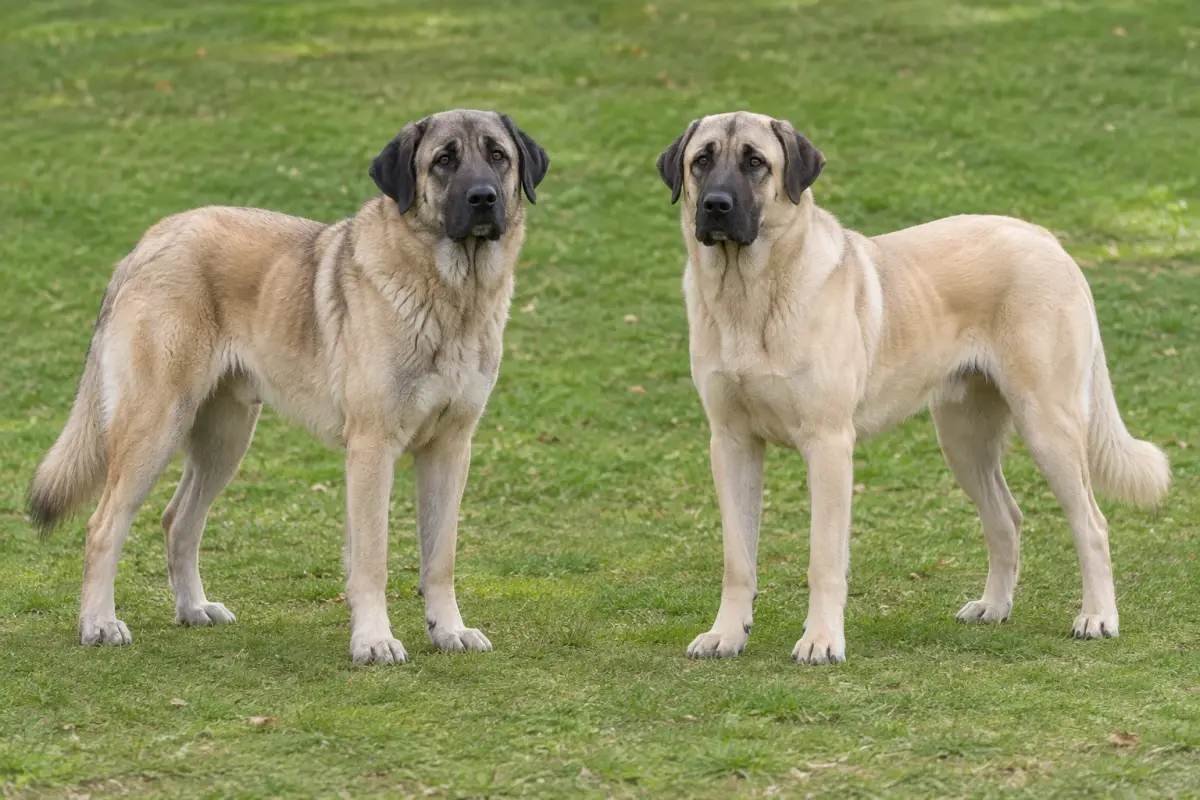
The Kangal and the Anatolian Shepherd are closely related Turkish livestock guardians, and some people consider them styles of one breed. In America they are registered separately: the AKC recognizes the Anatolian Shepherd Dog, while the Kangal Dog is recognized by the United Kennel Club. The clearest difference is color: a Kangal is always a solid cream to fawn with a black mask, while Anatolians can be any color. Both are giant, independent guardians best suited to working homes.
By Matt GarnettUpdated November 14, 20264 min read4 sources
Side by side
Size: the UKC standard gives Kangal males 29 to 33 inches and 110 to 145 pounds, females 27 to 31 inches and 90 to 130. For the Anatolian Shepherd, the AKC lists males at about 29 inches and 110 to 150 pounds, females at about 27 inches and 80 to 120, while the UKC gives males 29 to 32 inches. Lifespan: AKC gives the Anatolian 11 to 13 years. Recognition: the UKC recognized the Anatolian in 1993 and the Kangal in 1998; only the Anatolian is an AKC breed, ranked 86th.
Coat: the Kangal has a fairly short double coat; the Anatolian's outer coat is short or half-long over a thick undercoat. Color: Kangals are solid cream to pale tan or fawn with a black mask; any color is allowed in Anatolians. Temperament: both are alert, territorial and wary of strangers. Training: independent and strong-willed. Best for: farms and acreage with livestock to guard, and experienced owners.
One origin, two registries
VCA explains that Turkish shepherds have bred flock guards for centuries and that the Anatolian Shepherd shares the same background and function as other Turkish guardian dogs, with some believing they are different styles of one breed. The UKC traces the Anatolian to large dogs of ancient Mesopotamia, shaped by hot, dry summers and very cold winters on the Central Anatolian Plateau.
The UKC describes the Kangal as an ancient flock guardian named for the Kangal District of Sivas Province, valued for protecting sheep and goats from wolves, bears and jackals and celebrated in Turkey on stamps and coins. It was first imported to the United States in 1985. In Turkey, the UKC notes, non-standard colors are taken as a sign that a dog is not a purebred Kangal, which is why color matters so much to the breed.
Appearance
A Kangal is uniform in look. The UKC standard calls for a solid base color from cream to pale tan or fawn, sometimes grayish from dark-tipped hairs, set off by a black or dark mask and dark ears, with white allowed only on the feet, chest and chin. The coat is dense in winter, sheds much of its undercoat in summer, and is never feathered or plumed.
Anatolians vary more. VCA notes a single litter may include fawn, brindle, white, black or tricolor pups, all with a dark muzzle, and the UKC accepts any color. The Anatolian coat can be short or half-long and tends to be longer and thicker at the neck, shoulders and thighs. VCA adds that the Anatolian's long tail is often curled when the dog is at attention.
Temperament: guardians first
VCA describes Anatolian Shepherds as calm at home and on outings unless they think their property or people are threatened, accepting of introduced visitors but never effusive. It warns that children's rough play can be read as a threat, especially if a visiting child is involved, and that a fence may not hold a dog that decides to protect. The AKC calls the breed protective, territorial, patient and profoundly loyal.
The UKC describes the Kangal in similar terms: alert, territorial and defensive of its flock or family, preferring to intimidate predators but willing to take a stand. Kangals are instinctively wary of strange dogs but not typically belligerent toward people, and are reserved with strangers unless the owner is present. Neither breed suits dog parks, busy households with constant visitors or owners who want an obedience star.
Training, exercise and care
VCA says these strong-willed dogs cannot be pushed into anything and meet harsh methods with obstinacy, but cooperate with people they respect. Early socialization with family, neighbors and the vet is essential, and training must be firm, patient and positive. They are happiest with a job; without livestock, VCA suggests chores such as carrying a backpack on walks or pulling light loads.
Exercise needs are moderate: a daily walk or play plus time patrolling a securely fenced property. Grooming is basic brushing, nail trims and ear and tooth care, with a heavy seasonal shed. VCA flags that Anatolians rarely show pain, so check them regularly for injuries, and it lists hip and elbow dysplasia, occasional eye problems and hypothyroidism as concerns. Ask breeders for hip and elbow certification of both parents.
This page is general information, not veterinary advice, and it cannot replace an examination by the vet who knows your pet.
Common questions
Is a Kangal the same as an Anatolian Shepherd?
They are closely related, and VCA notes some people believe they are styles of one breed. In America they are registered separately: the AKC recognizes the Anatolian Shepherd Dog, and the UKC recognizes both under separate standards.
Which is bigger, a Kangal or an Anatolian Shepherd?
They are very similar. The UKC standard gives Kangal males up to 33 inches and 145 pounds, and the AKC gives Anatolian males about 29 inches and up to 150 pounds. Individuals overlap.
How can you tell a Kangal from an Anatolian Shepherd?
Color is the quickest clue. A Kangal is always solid cream to fawn with a black mask and dark ears, while an Anatolian can be any color, including brindle, white or tricolor.
Are Kangals or Anatolian Shepherds good family dogs?
Only in the right home. Both are loyal and protective with family, but VCA warns their guarding instincts can misread rough play between children. They suit experienced owners with space and a job for the dog.
Sources we checked
This guide is general information, not veterinary advice. If your pet is unwell or injured, contact your veterinarian.